As Lead Product Designer on a six-month mission at France VAE, the national public service for validation of acquired experience, I gave a working framework to a team that received politically driven requests with few specifications. The result: an employer MVP ready to deploy, priorities settled with one shared matrix and two AI prototypes delivered in one week.

“Victor quickly understood the complexity of our environment and knew how to structure design operations while delivering critical features. His ability to navigate institutional constraints while maintaining high design standards was remarkable.”

France VAE is the national public service for validation of acquired experience (VAE): it lets citizens without a diploma have their professional experience officially recognized and obtain a certification. The service reaches 100,000+ candidates. Critical features often came from politically driven requests with few specifications, in a team that worked in silos.
Lead Product Designer on a six-month mission at beta.gouv.fr. I led the design team’s process, co-drove the roadmap with the Lead PM and structured discovery so the delivery team could ship faster. A transversal role across the whole product cycle.
VAE Collective MVP
Employer journey prototype for collective VAE, sales deck and promotional video.
Product operations
One-month seasons, a three-tier strategic framework and a cross-team prioritization matrix.
User research
Knowledge base, 10 moderated interviews in 2 waves and 2 synthesis reports.
Design thinking workshops
Two days of workshops with accompaniment providers, plus internal workshops.
AI experimentation
Two functional prototypes in one week: a positioning chatbot and a skills radar.
UI deliveries
Homepage redesign, certification search engine and a presentation video for the Minister of Labor’s cabinet.
In a public service that reaches more than 100,000 candidates, requests often came from the political level before the need was specified. The product team worked in fits and starts: priorities kept changing, teams sat in silos, and the line between exploring and executing was blurred. The challenge was twofold: ship critical features and, at the same time, structure discovery and the roadmap so that decisions came faster.
I worked on three levers, in this order: how the team works, what we know about users, and direct contact with accompaniment providers.
Priorities changed often and teams worked in silos. With the Lead PM, I set up three things: one-month seasons (25% preparation, 50% execution, 25% retrospective), a three-tier framework (objectives, initiatives, features) and a prioritization matrix filled in by product, business, design, support and tech. Each topic gets a score from shared criteria, so teams settle their trade-offs on the same grid.
01 / 04
Product decisions were made without consolidated user data, and field feedback stayed in individual notes. I centralized a knowledge base, then ran ten moderated remote interviews, in two waves, on the new candidate dashboard. Feedback is sorted into quick wins, bugs, UX issues and feature requests, and two synthesis reports were presented in plenary. Decisions now rely on structured qualitative data.
01 / 03
The product team had no direct contact with accompaniment providers, who play a key role in the VAE journey. I prepared and facilitated two days of workshops with them: a structured debate on a business issue, priority themes, ideation on the platform’s problems, then solution sketches. They became active design partners. Internal workshops completed the work: Crazy-8, the evolution of notifications and an audit of the e-mails sent to users.
01 / 04
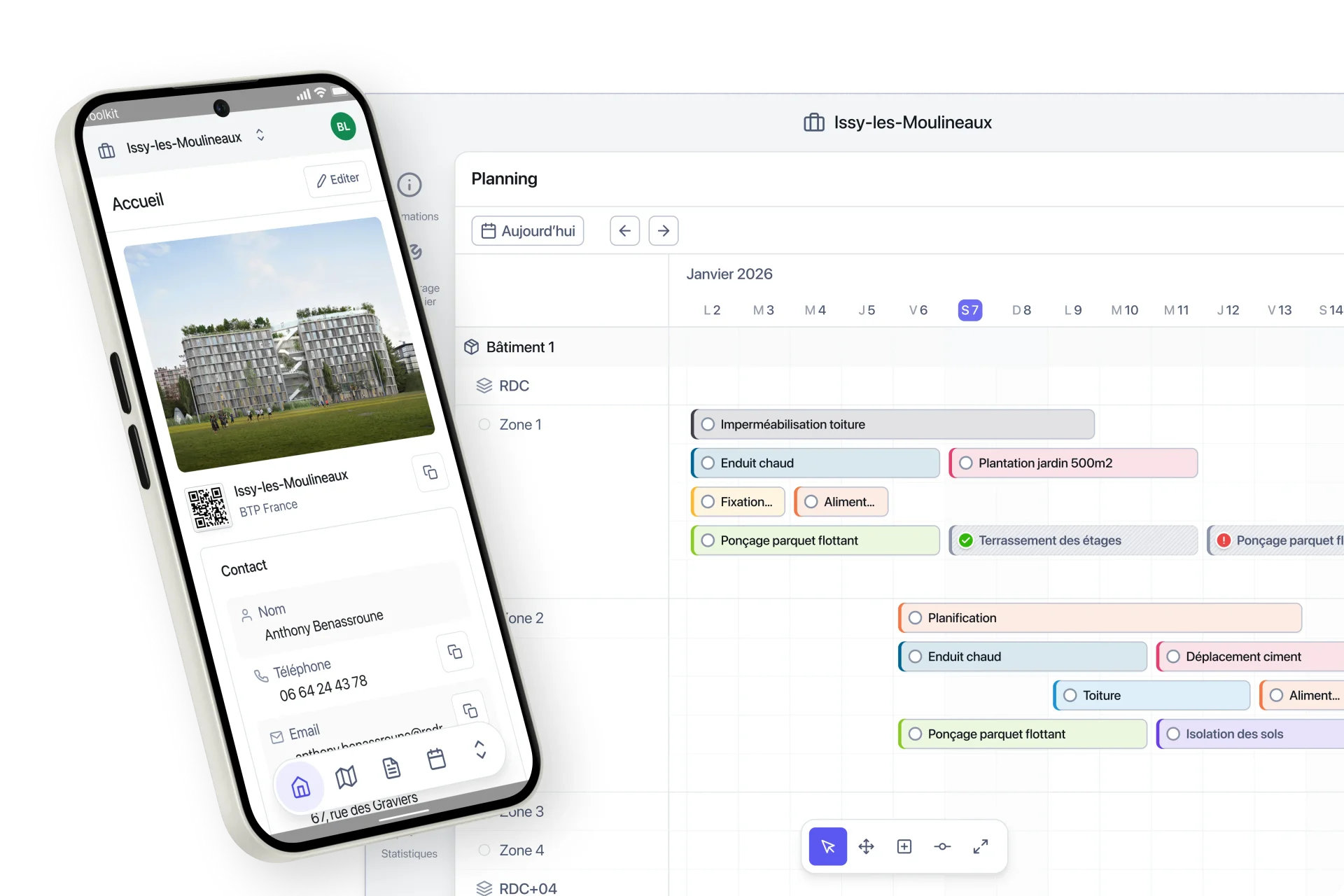
Companies running a collective VAE had no dedicated tool: HR teams coordinated cohorts of 10 to 90 candidates by e-mail, spreadsheet and phone. After two weeks of discovery with HR managers and training center directors, I spent three weeks designing the journey prototype (cohort declaration, employee invitation, progress tracking, coordination with validators), a B2B deck and a promotional video. The offer is structured and ready to deploy.
01 / 04
55% of candidates do not know whether VAE suits them, and many pick a certification by default. I identified typical profiles and their barriers, explored more than ten concepts, then built two functional prototypes in one week: a positioning chatbot and a skills radar. The initiative was not prioritized, but the prototypes informed product decisions.
01 / 02
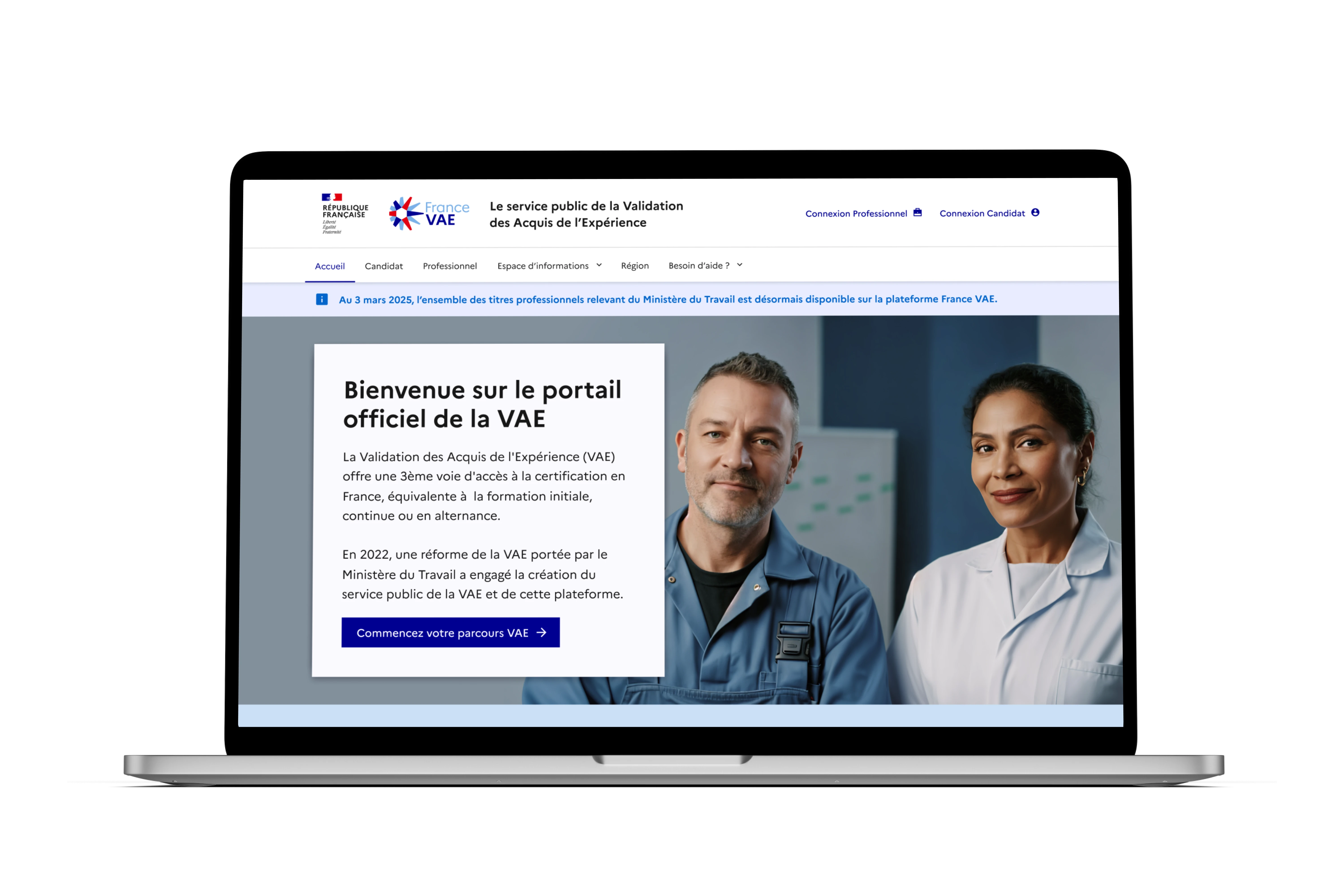
I redesigned the homepage to clarify the value proposition and simplify the entry point of each candidate profile, then reworked the search engine across more than 16,000 certifications. My last piece of work was a presentation video of the candidate journey, shown to the Minister of Labor’s cabinet.


In six months the team gained a shared decision framework, a user knowledge base and an employer offer ready to deploy. One topic stays open: AI-assisted orientation, which was not prioritized.
Public procurement, regulation, institutional vocabulary: every design decision accounts for an ecosystem of actors with different logics.
In a context of high uncertainty, investing in process has more impact than delivering extra screens.
The AI prototypes tested hypotheses in one week instead of two months of specification. Even deprioritized, they informed product decisions.