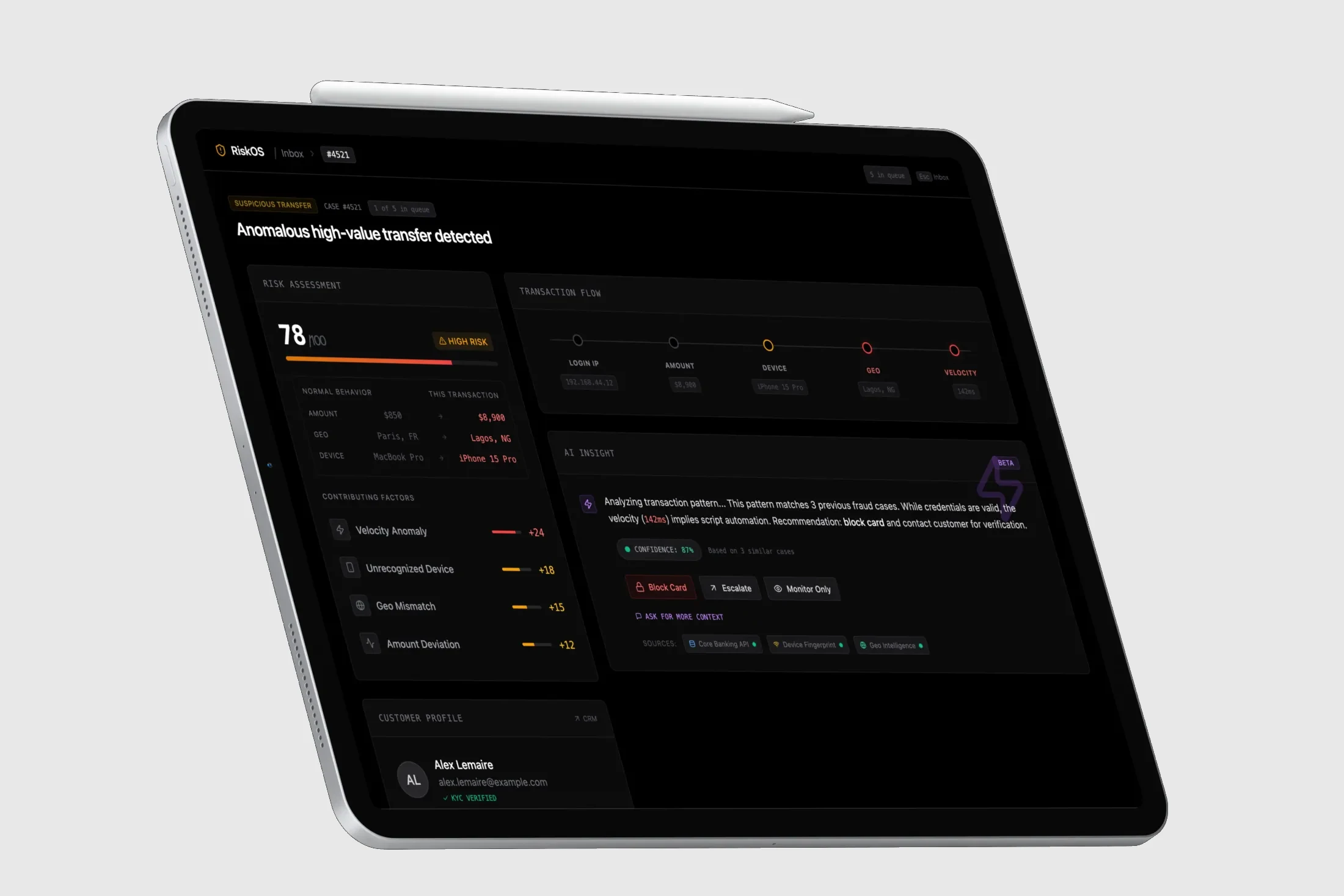
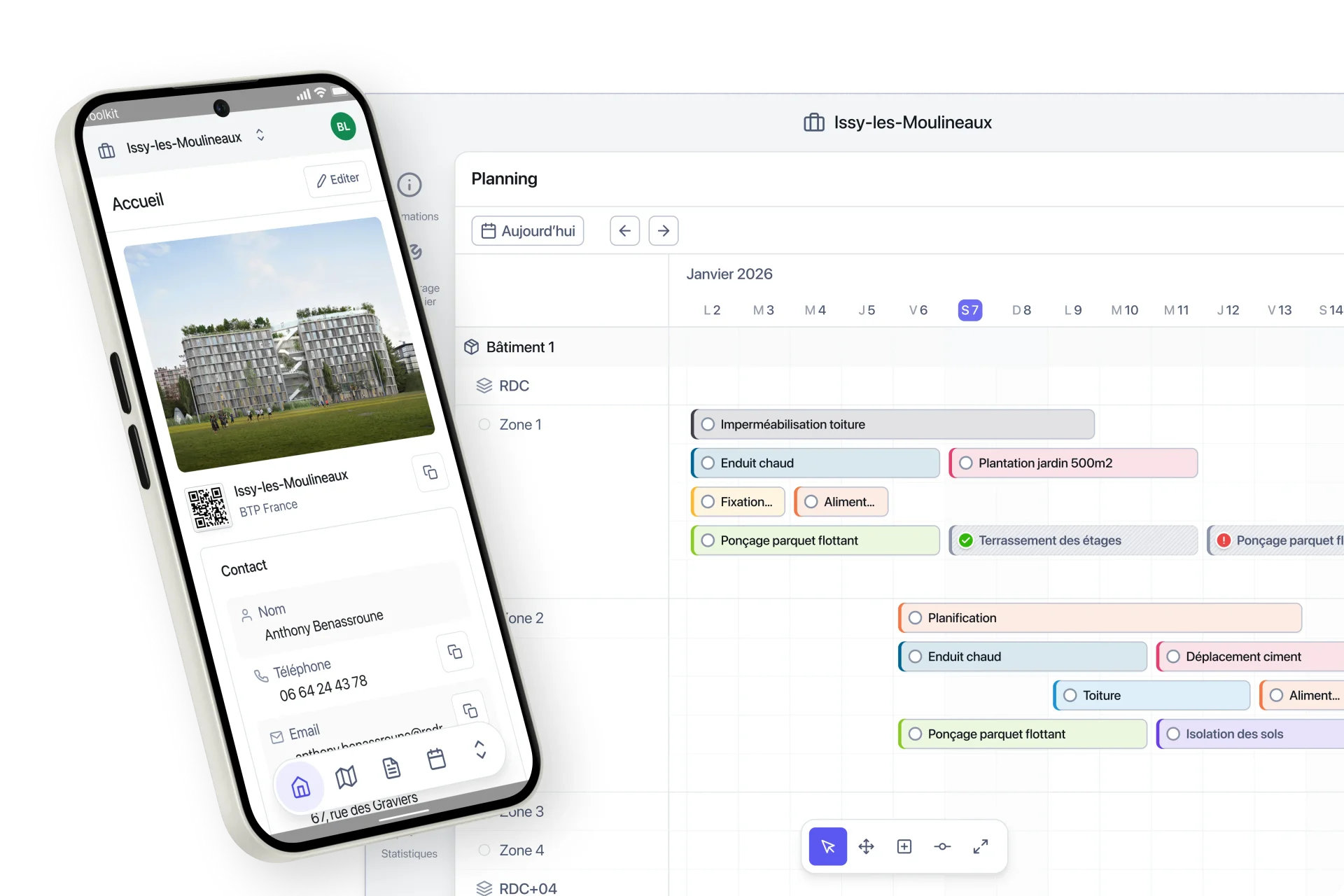
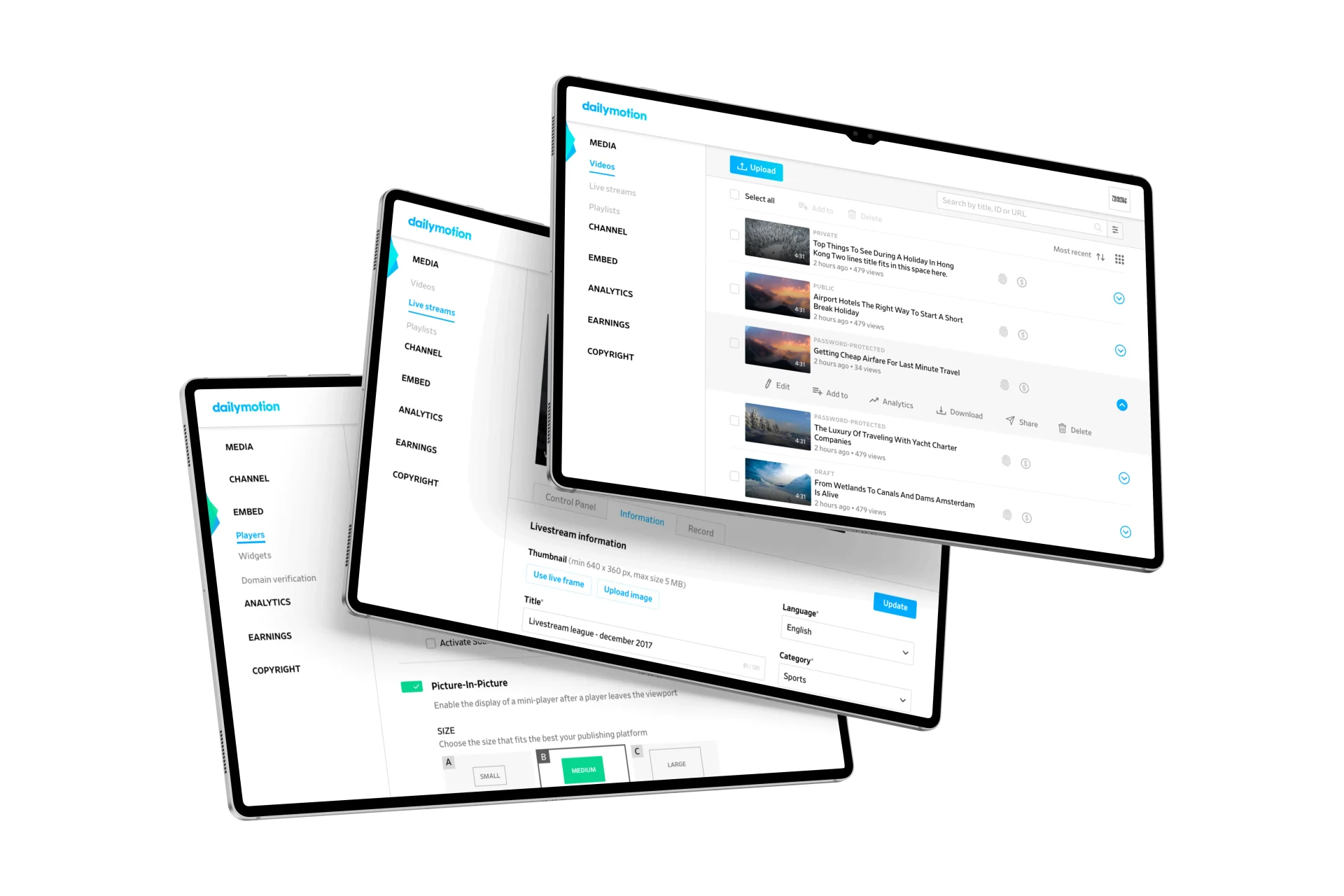
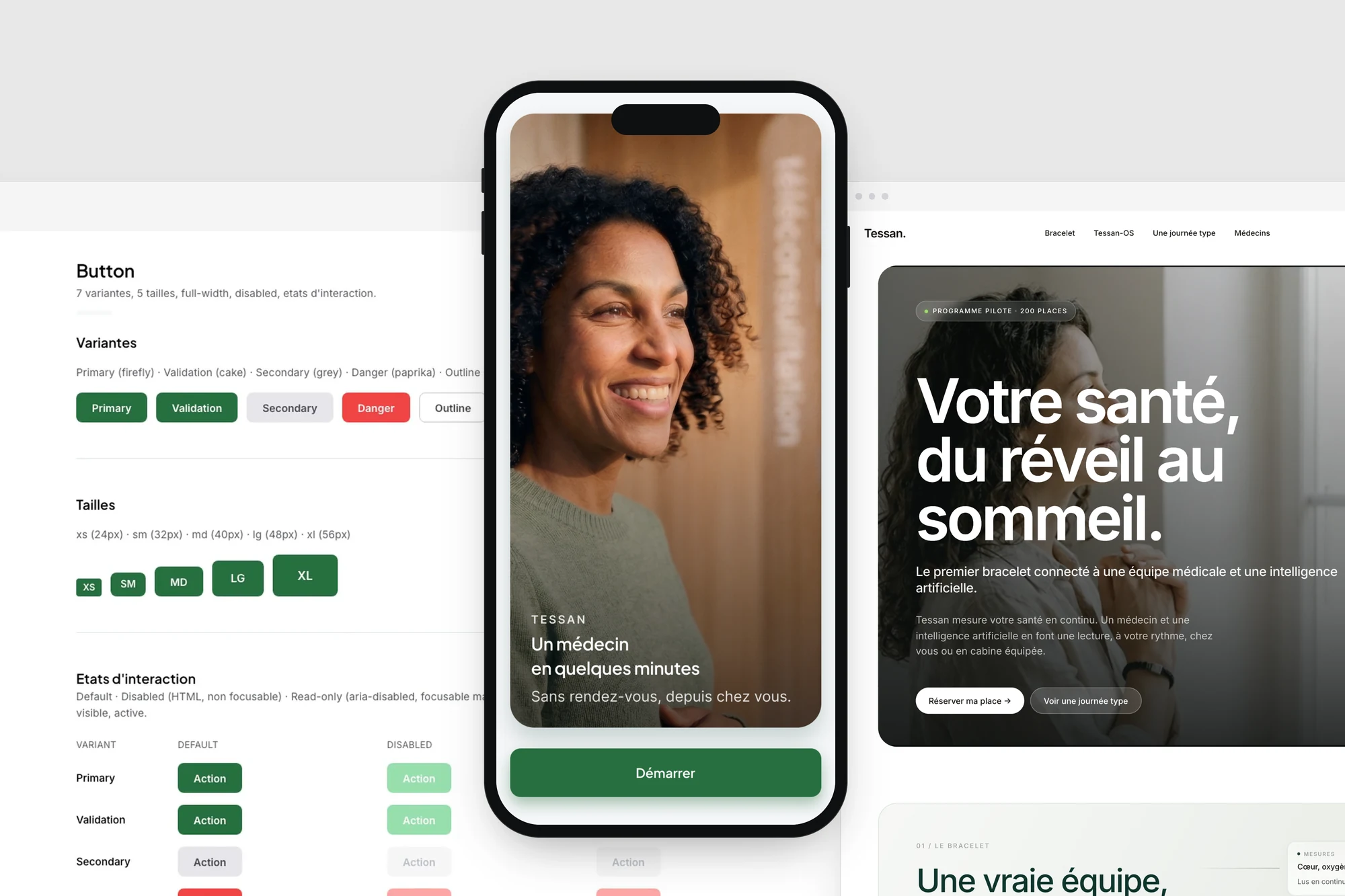
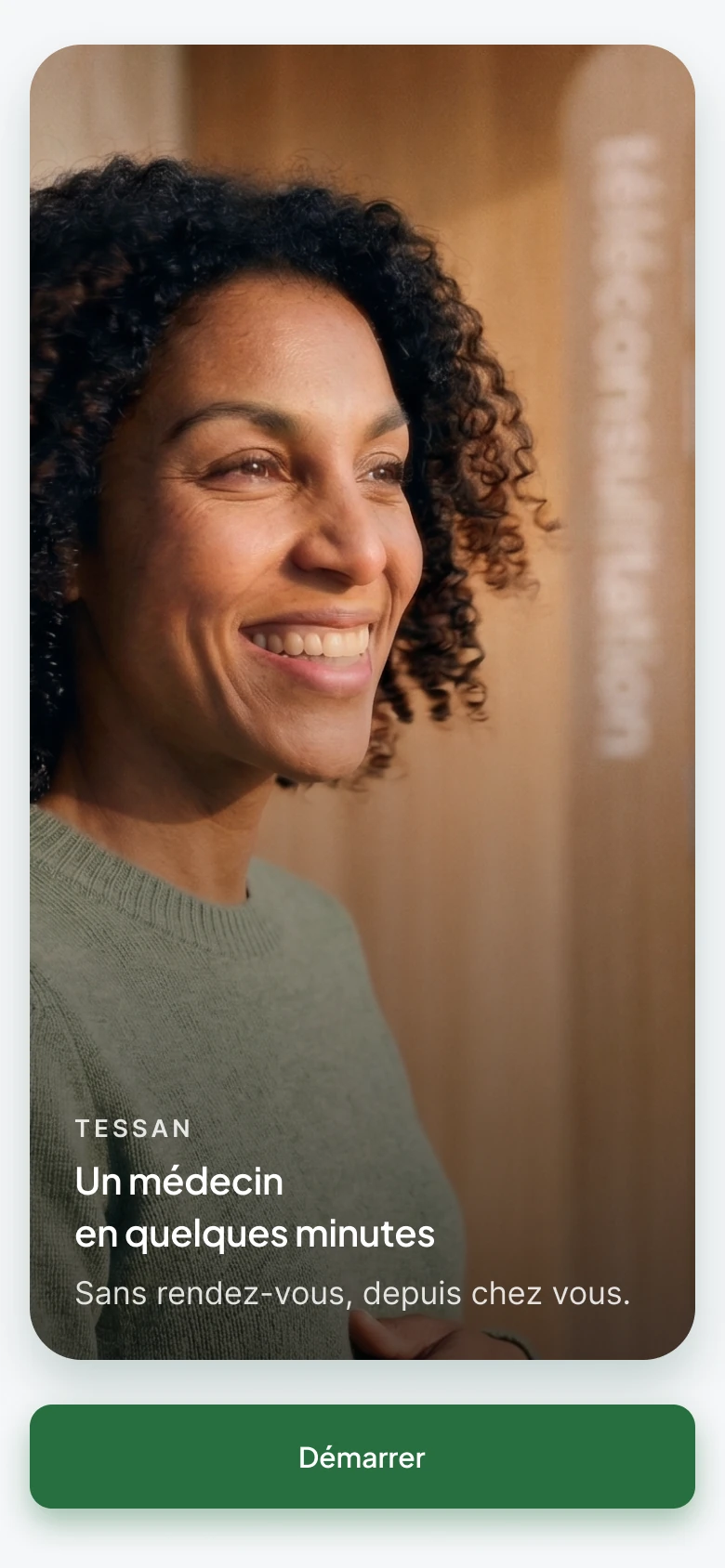
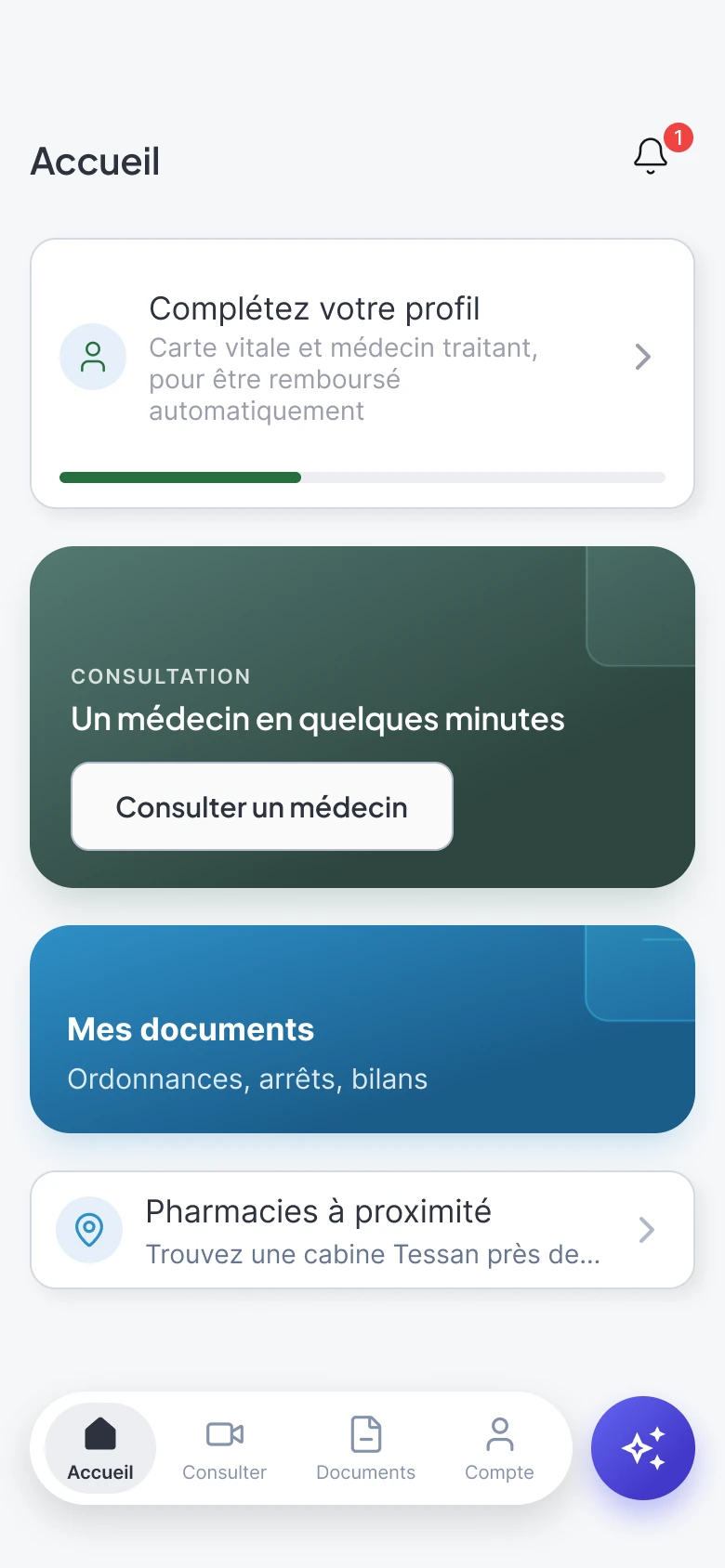
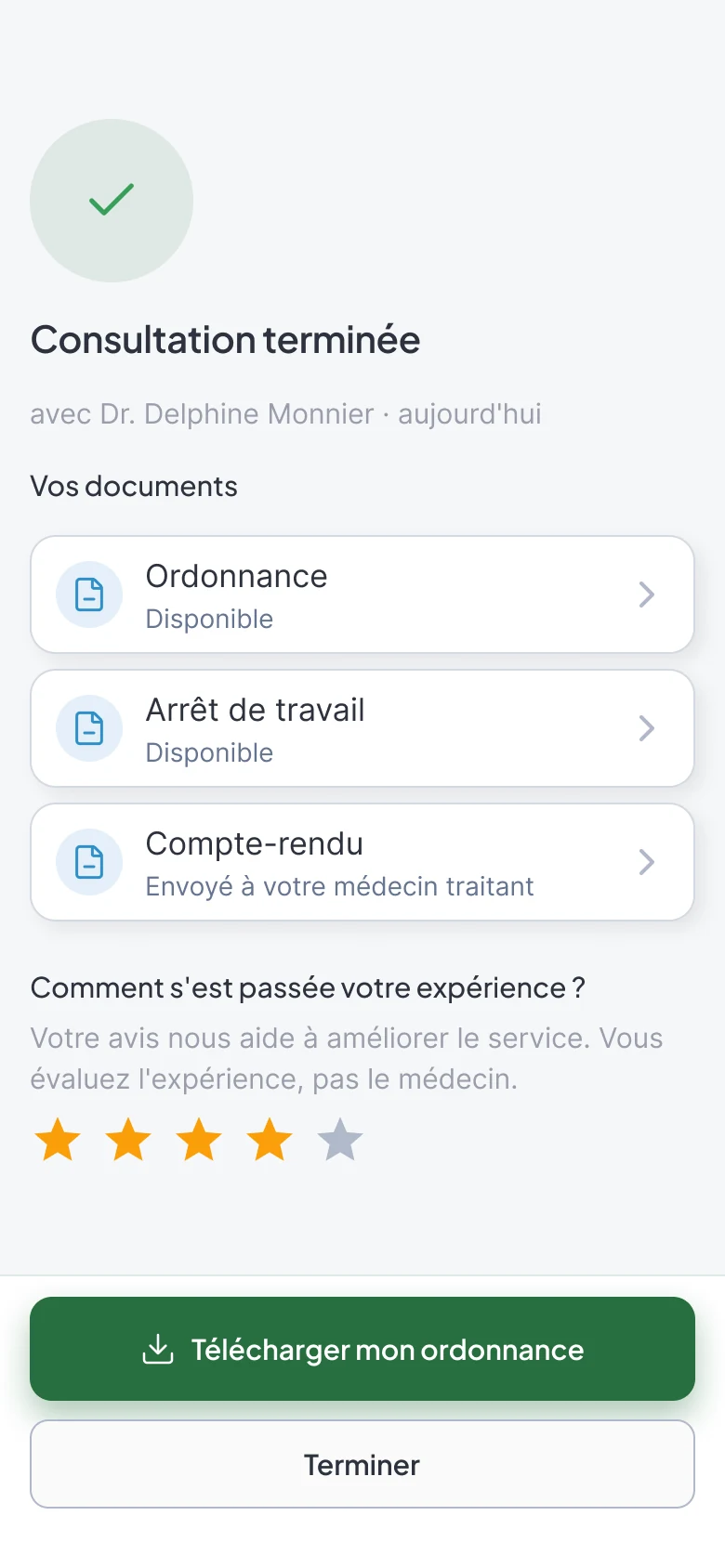
Three months at Tessan, which equips pharmacies with telemedicine booths. As the company’s first designer, I led the rebuild of the patient app with a tech lead and two developers, around a design system, an AI assistant that does not diagnose and a product vision, the Health Hub.

Tessan equips pharmacies with telemedicine booths. The stake: value comes from the patient who returns, and the existing app did not contribute, with a fragmented session, double navigation and a funnel of 8 to 13 screens. The goal: a first version centered on the consultation, released on the App Store and Google Play on July 15.
The company’s first and only designer. Design lead and product owner of the patient app, with a tech lead and two developers.
Patient app
iOS and Android
Consultation funnel
audit of 25 screens, reworked journey
Health Assistant
four journeys, guardrails
Health Hub vision
five prototyped concepts
Rebuilt in native in 30 days around the consultation: a lighter funnel, an assistant that does not diagnose, three builds in two weeks.


Seven prototypes in a week to make the vision discussable, then a single app: the consultation that funds, prevention programs that retain.
A React kit aligned with Figma, a skills pack for Claude Code and a Notion index an agent can read: governance through the tool rather than the document.
The app went live on the App Store and Google Play on July 15, and no impact metric existed when I left. The store reviews give a first measure in October: the average rating of written reviews goes from 3.6 out of 5 (5 reviews, old app) to 4.5 out of 5 (17 reviews, new app), and the public ratings reach 4.7 on Google Play (105 ratings) and 4.8 on the App Store (151 ratings). The sample is too small to credit the difference to the rebuild, all the more as the October 14 update has changed the app since, and step-by-step completion was not tracked. I would set up measurement before the funnel redesign, and the governance of the management system before the tool.