Approach
Most B2B products that fail are not poorly designed. They are designed without asking the right question early enough, or without verifying the answer soon enough. The prototype arrives too late, after the specs, after the budget decisions, when it can no longer change anything.
I design data-dense business tools in partnership with a product lead. EdTech, construction, civic tech, media. My method rests on a simple principle: frame the problem, build a testable answer within a week, and decide based on what we observe, not what we assume.
How the work is structured
Three stages, adapted to each project. We set the rhythm together from the first week.
Before the first screen, we align on what we are solving and why it matters.
Output
Scoping document with perimeter, risks, and hypotheses. FigJam board or Notion doc, restitution deck.
Example
France VAE: 10 field interviews with counselors restructured the collective MVP priorities before a single screen was designed.
What guides the decisions
Three principles that orient every project.
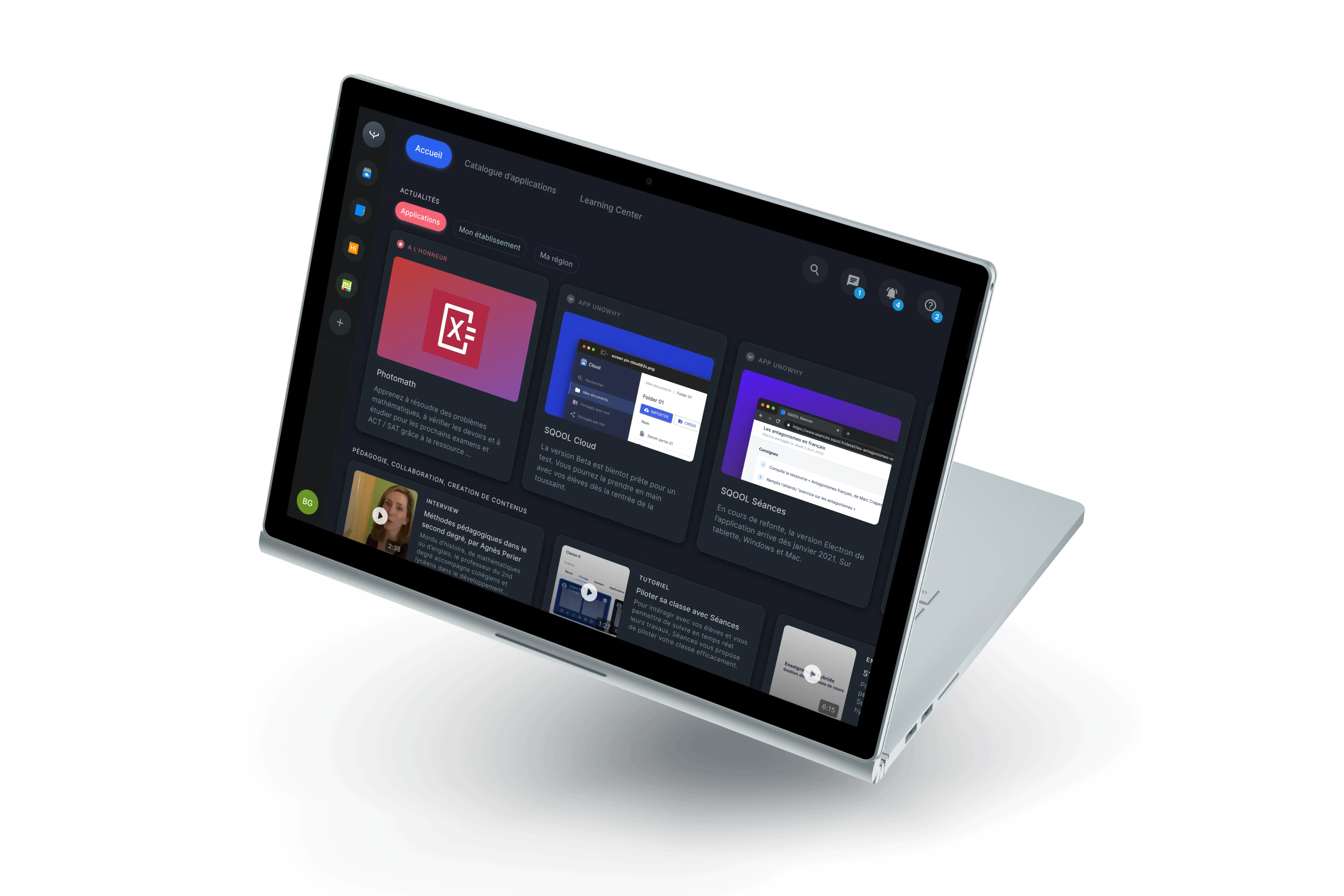
At UNOWHY, the Connect dashboard prototype showed that teachers needed specialized applications, not a unified dashboard. We changed direction. That prototype showing the "wrong" direction saved the project six months, because it asked the right question at the right time. At Toolkit, the V2 prototype helped the CEO secure the second funding round. In both cases, the prototype did what a specification document never could: it made the decision tangible.
Case study
SQOOL Connect
How prototyping the wrong direction saved six months and redefined the product.
Working together
Three principles: every workshop has a defined deliverable, the PM sees progress as it happens, and every tradeoff is documented. Product specs are the PM's responsibility. I produce annotated mockups and documented flows that feed them. Design is visible from the first explorations.
Frame & hypotheses
Terrain + analysis
Share & decide
Sync PM/Designer
Exploration or craft
Sprint review
Frame hypotheses. Who to talk to. Protocol.
User interviews. Observations. Data analysis.
Map insights. Emerging patterns. Reframe.
Restitution. Validate or pivot. Decision.
Sync PM/Designer. Sprint goal. Review hypotheses.
Exploration or iteration. Async exchanges.
Pattern coherence. Prep refinement or demo.
Prototype presented. Backlog prioritised.
Monday: align. Midweek: deep work. Friday: share and decide. Rhythm is set together in the first week.
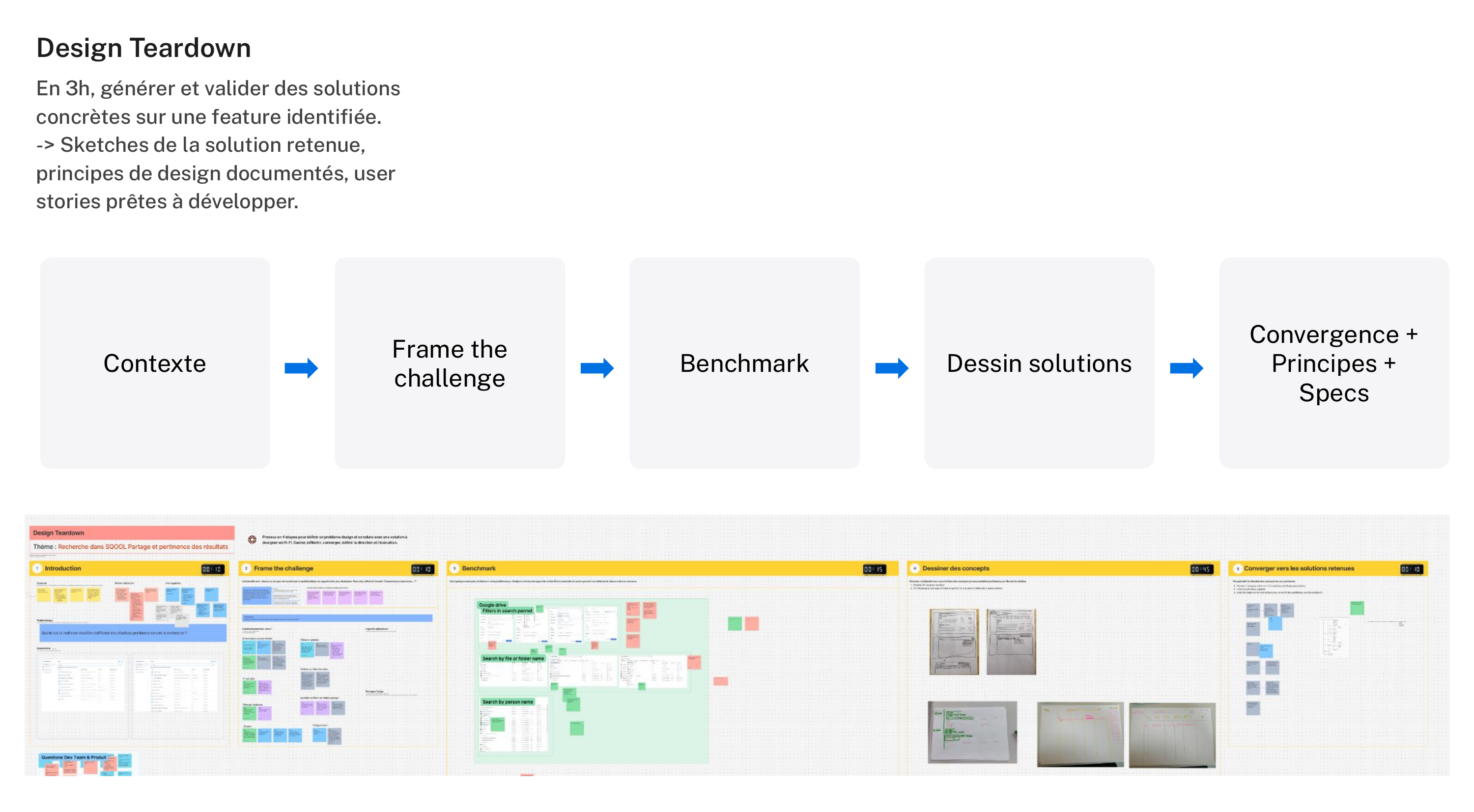
Design Teardown: in 3h, generate and validate concrete solutions on a specific feature.
What I produce, by phase
The right level of fidelity depends on the question being asked, not on the project stage.
See the approach in action
France VAE
6-month mission structuring product ops for a national public service scaling to 100K+ candidates.
Toolkit
0-to-1 Product Design for a Construction Tech SaaS. From pitch deck to MVP.
SQOOL Connect
Designing a web-based dashboard concept and persistent interaction prototype for classroom orchestration.
Related writing
The PM-Designer partnership: three principles that make it work
Every productive PM-Designer collaboration I have experienced rested on three things. Rigorous preparation: every workshop has a scenario, e...
Design scoping is 80% of the work
Most design projects that go sideways do so before a single screen is drawn. The brief was vague, the scope was implicit, the success criter...