In 2020 I led the design of Connect, a web dashboard meant to replace UNOWHY’s Android launcher, and of La Bulle, a floating interface that went with it. The prototype never shipped as a product. It convinced the leadership to change strategy and opened the way to the SQOOL suite.

UNOWHY’s Android launcher was outdated technically and visually, and the surge in digital use during COVID-19 made replacing it urgent. It no longer matched how high schools, then entering the Plan Lycée Numérique, were teaching. Connect was the proof of concept for a web dashboard for teachers, in a program that equipped 465 schools and 500,000 students in Île-de-France.
Product Design Lead. I started the Connect vision with the Head of Product, co-wrote the PRD and designed every interface. I worked daily with a React developer to build a working prototype, which was presented to the leadership.
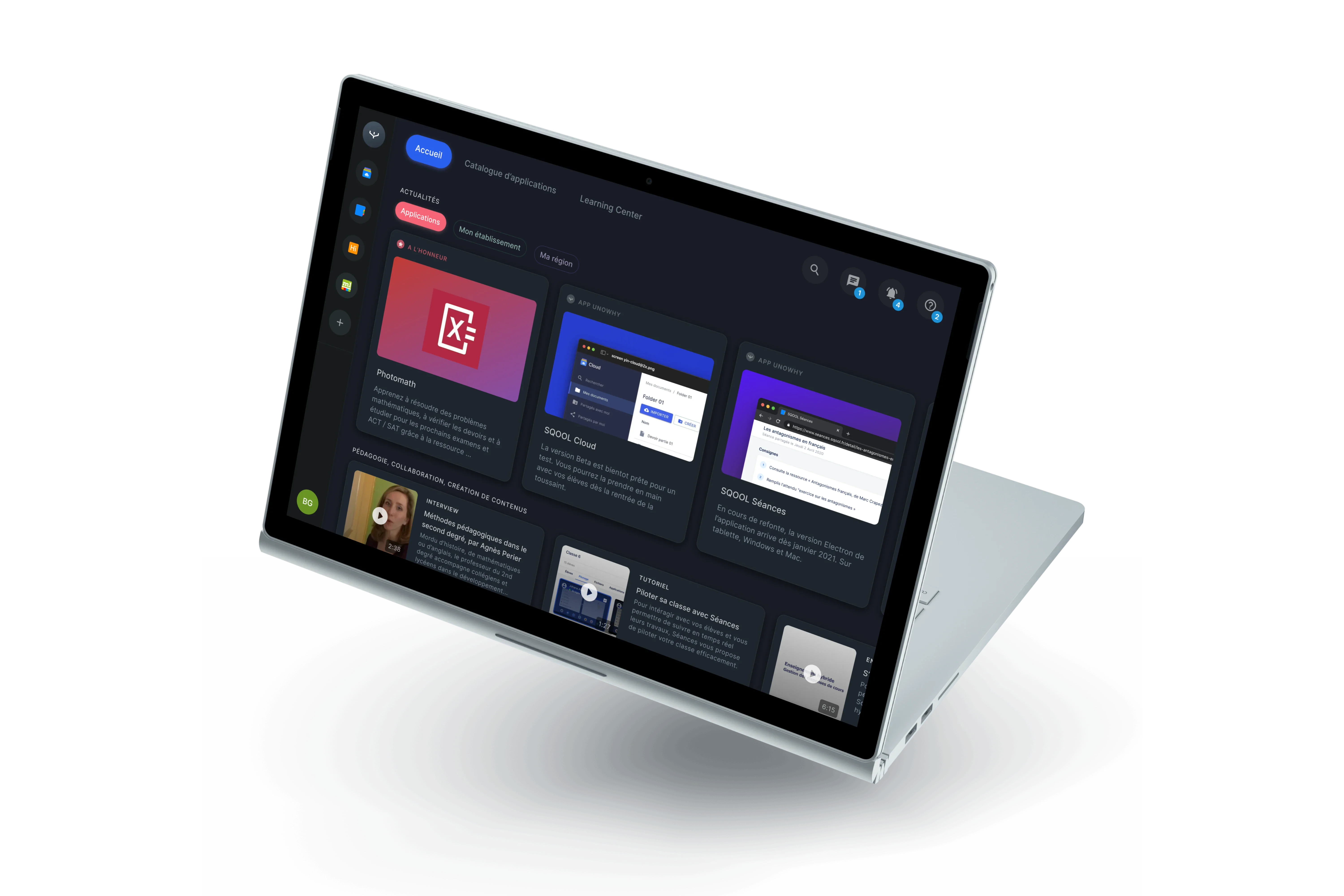
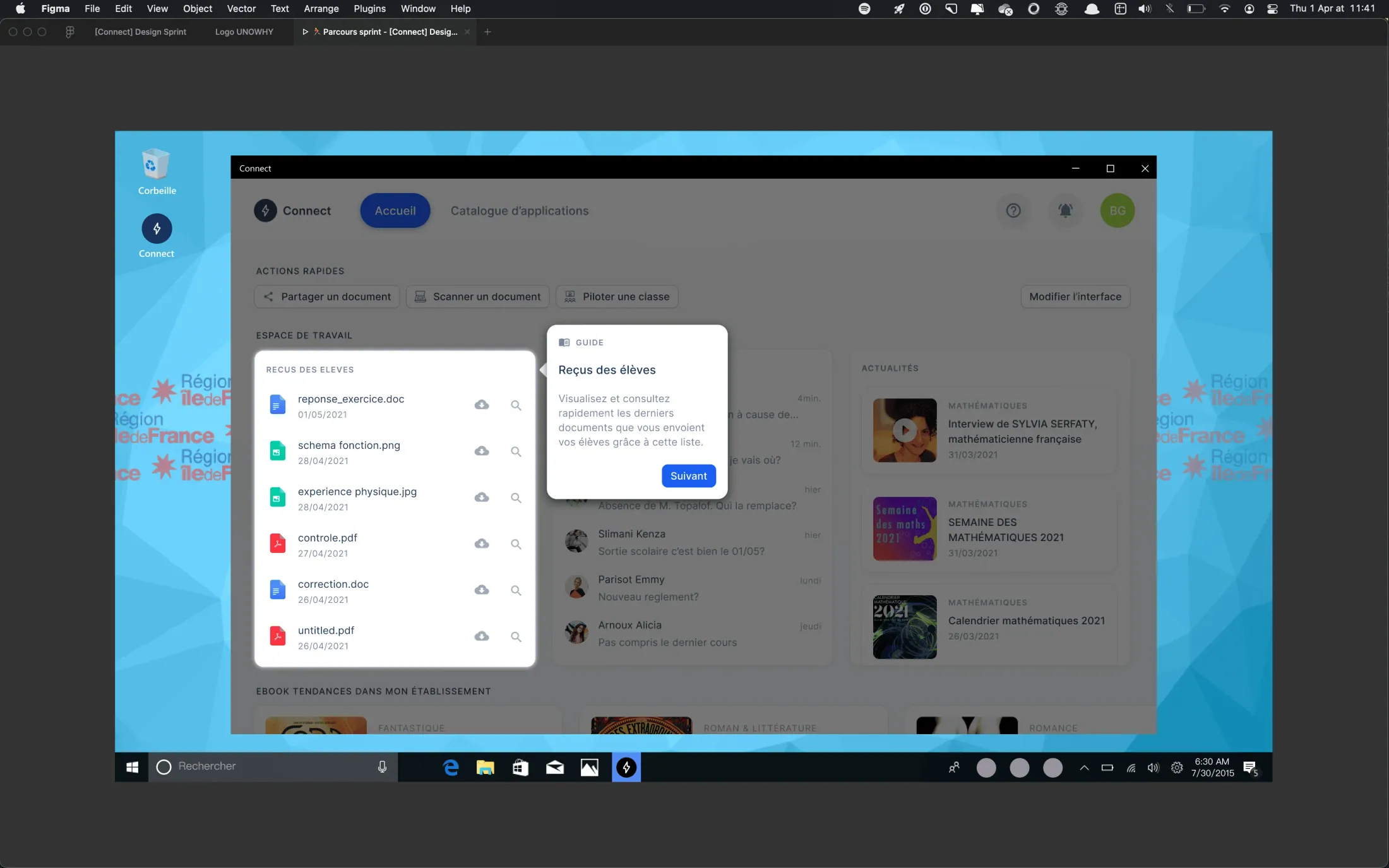
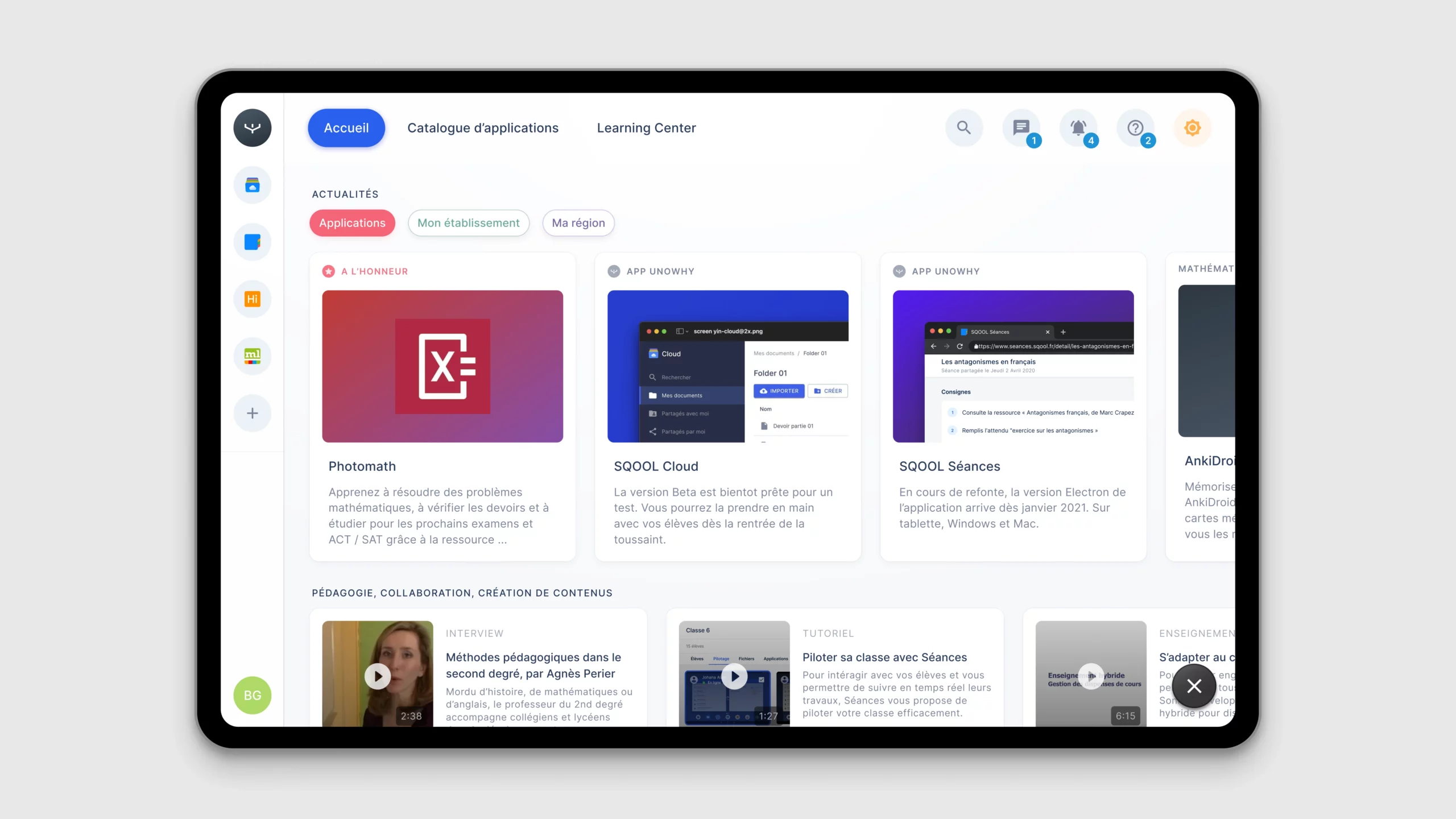
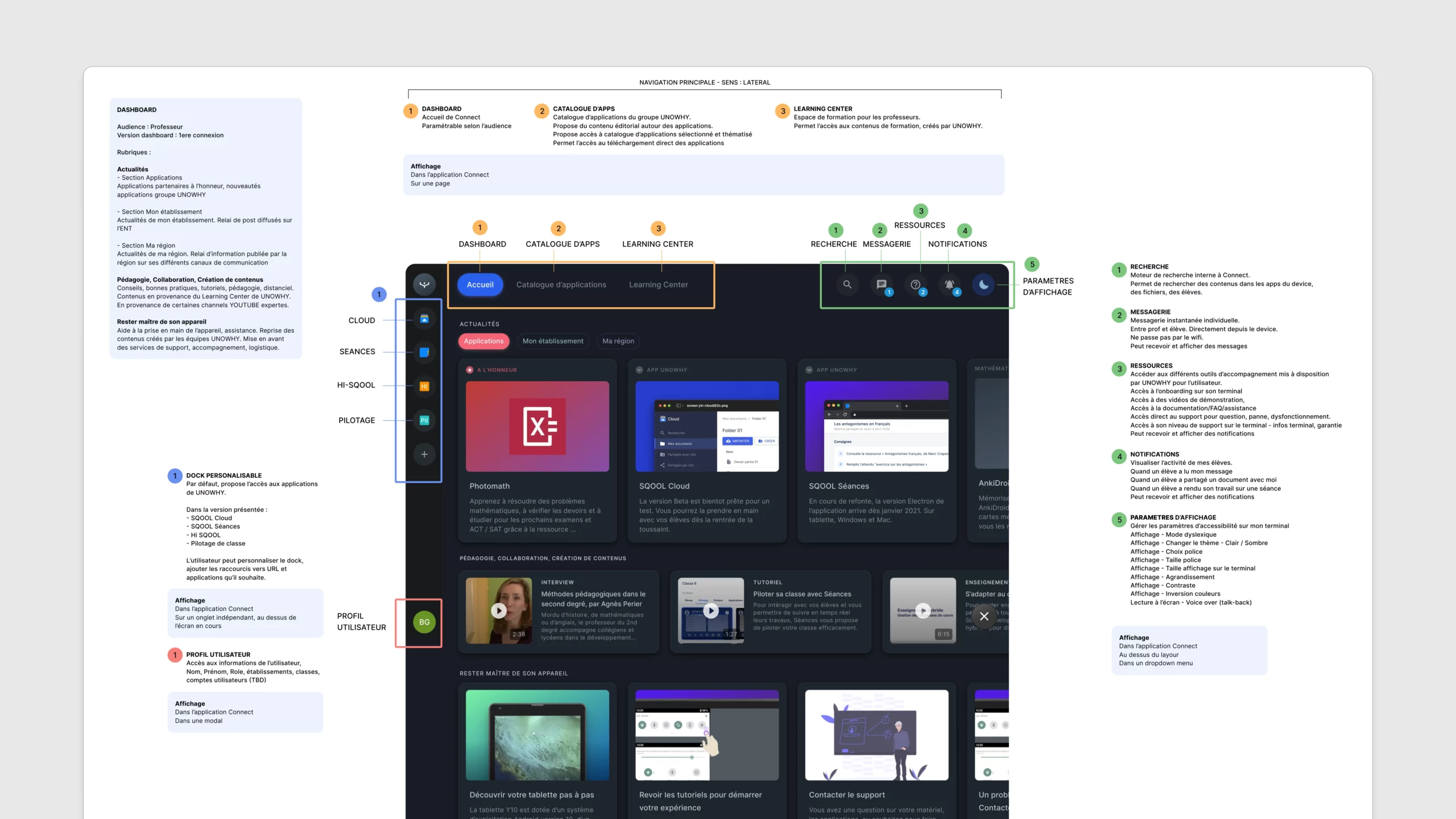
Teacher dashboard
Quick actions, class status, app catalog and notifications, in light and dark themes.
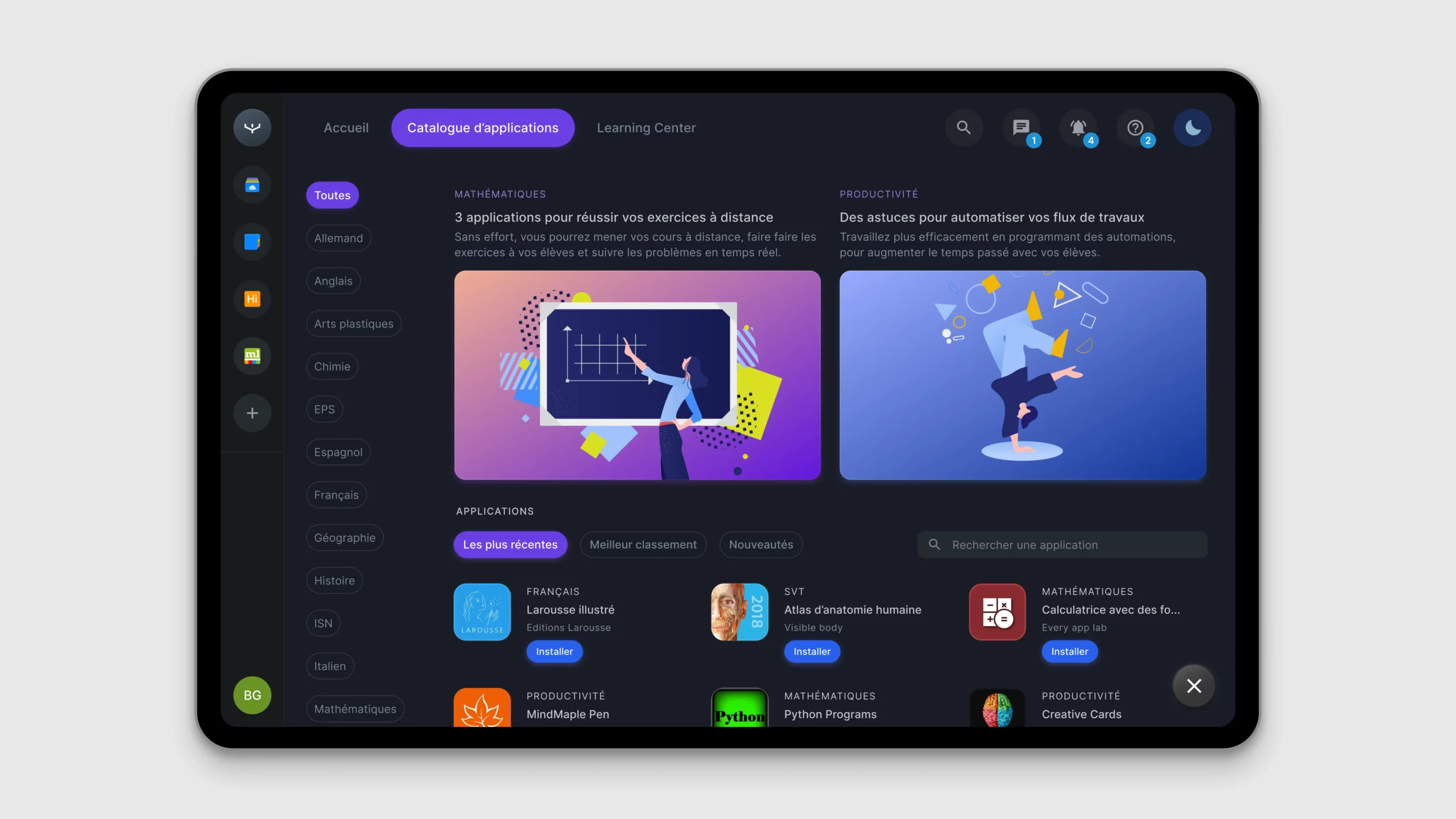
App catalog
Searchable, filtered access to educational apps, linked to MDM policies.
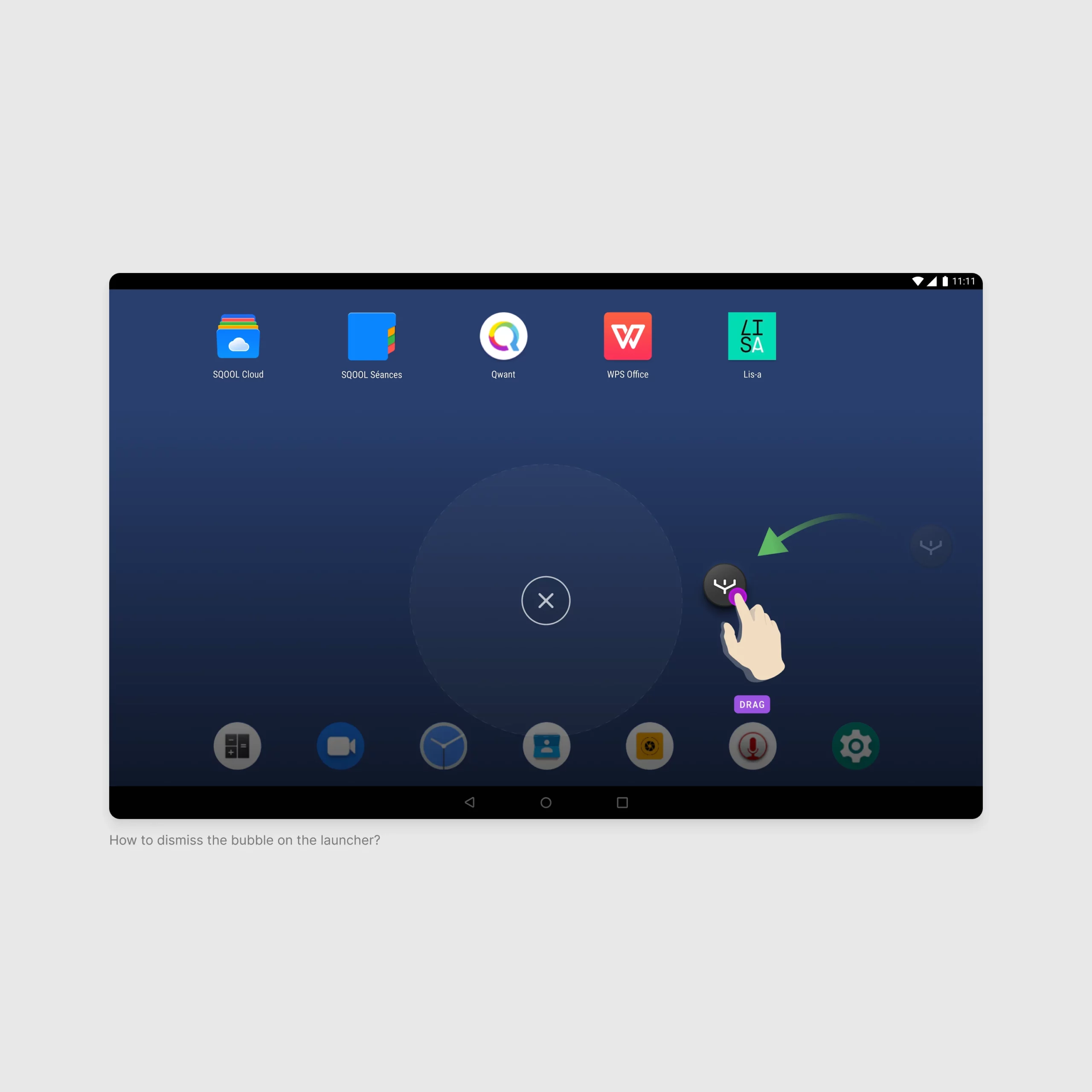
La Bulle
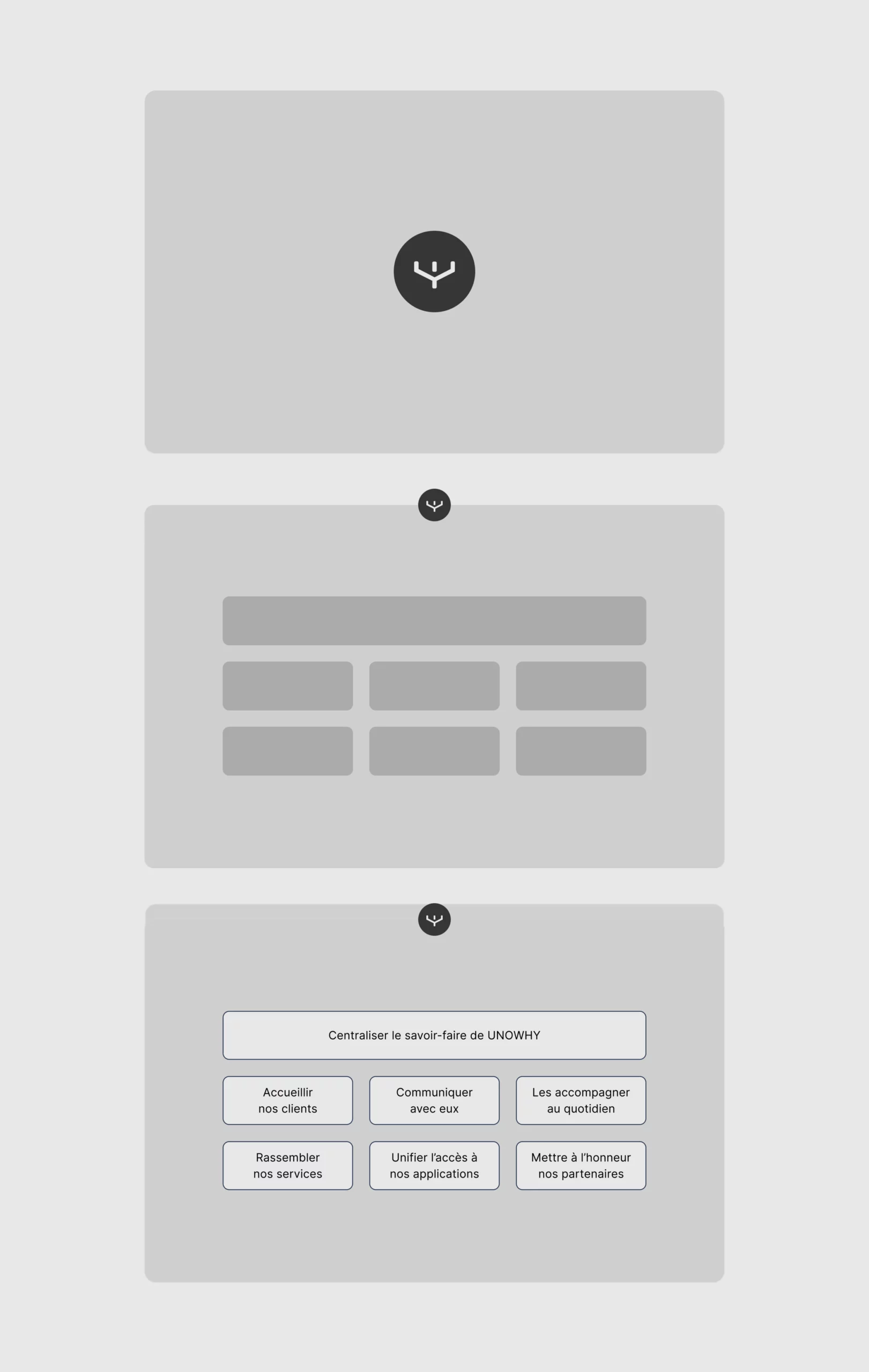
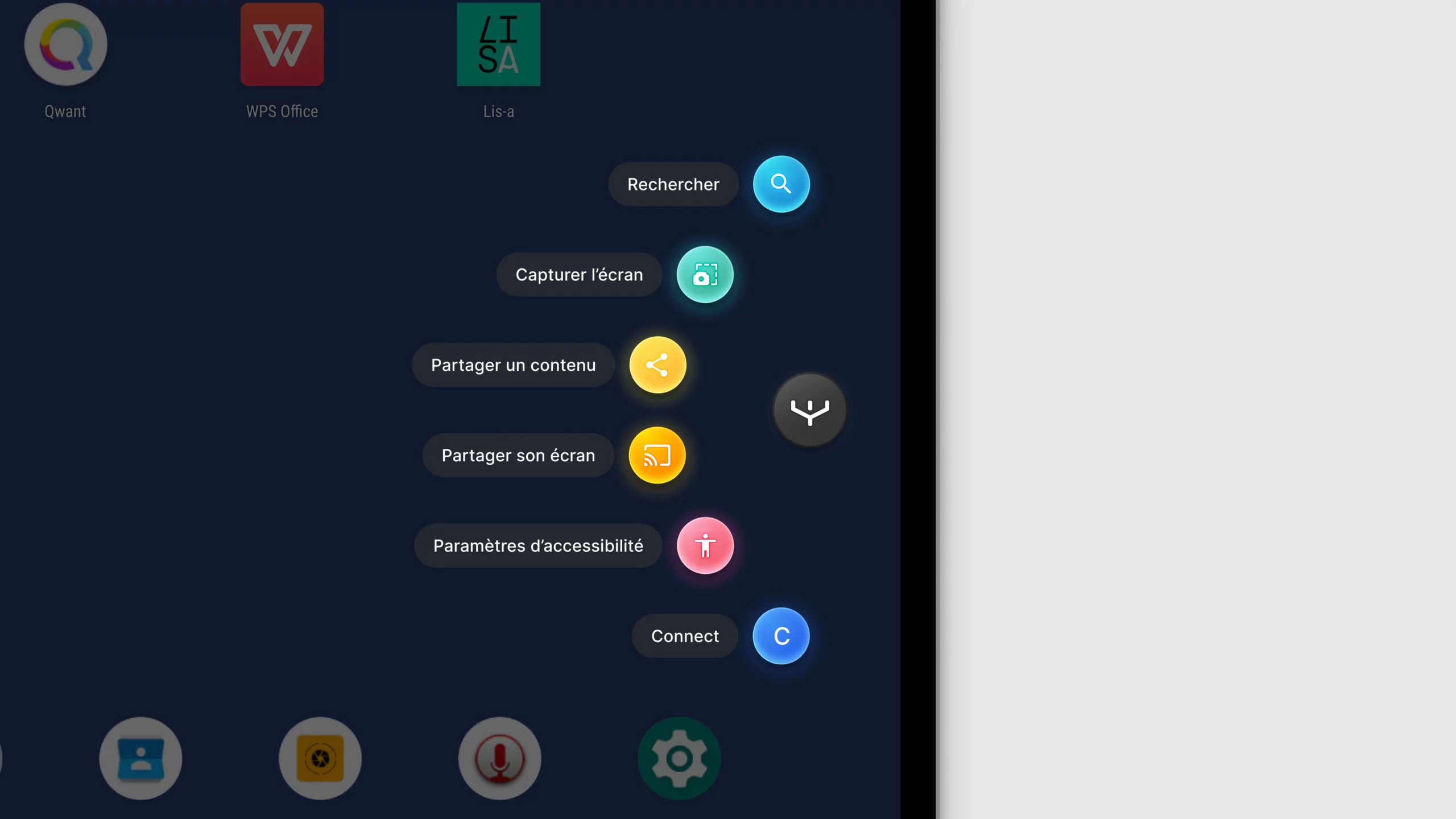
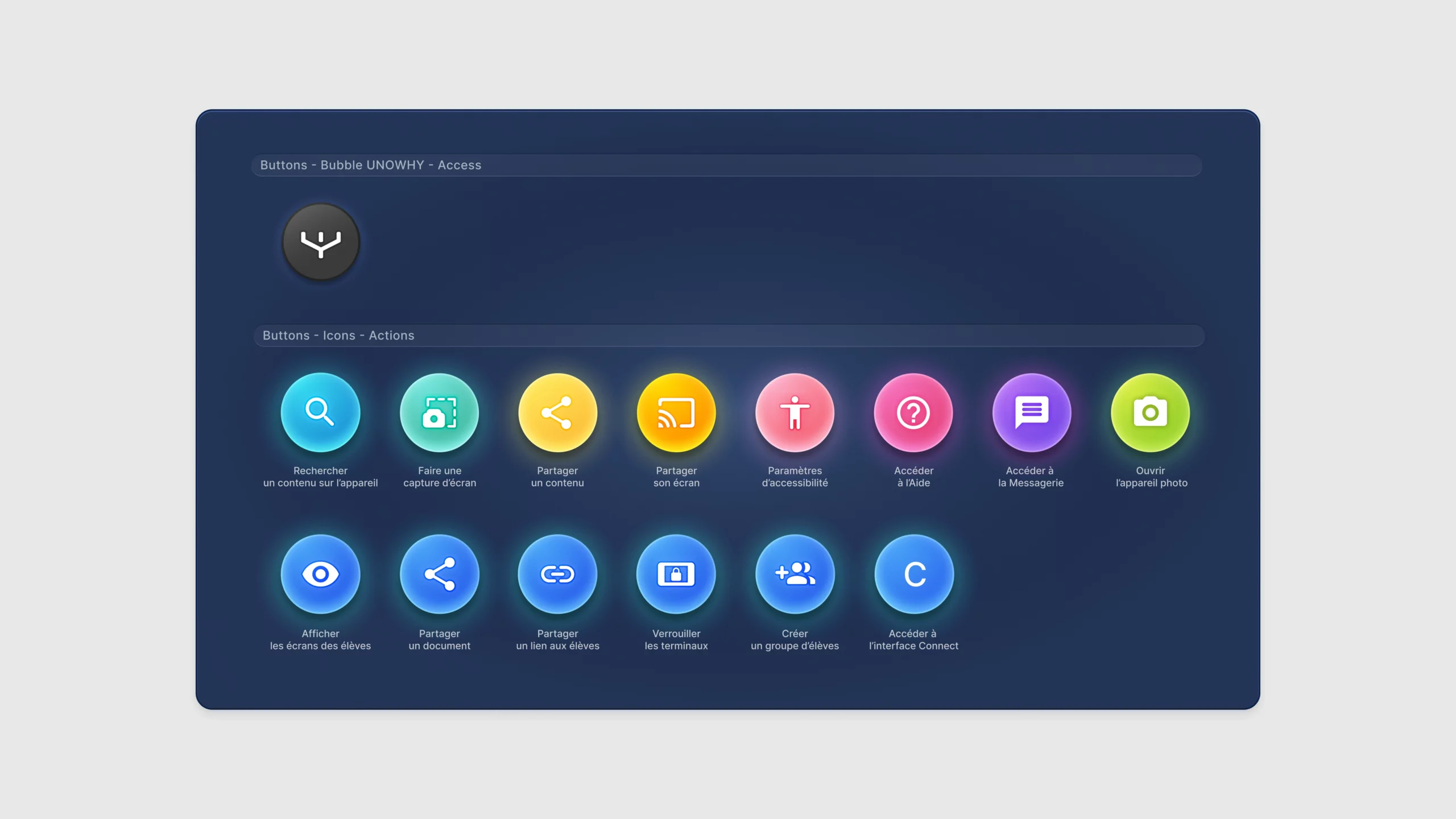
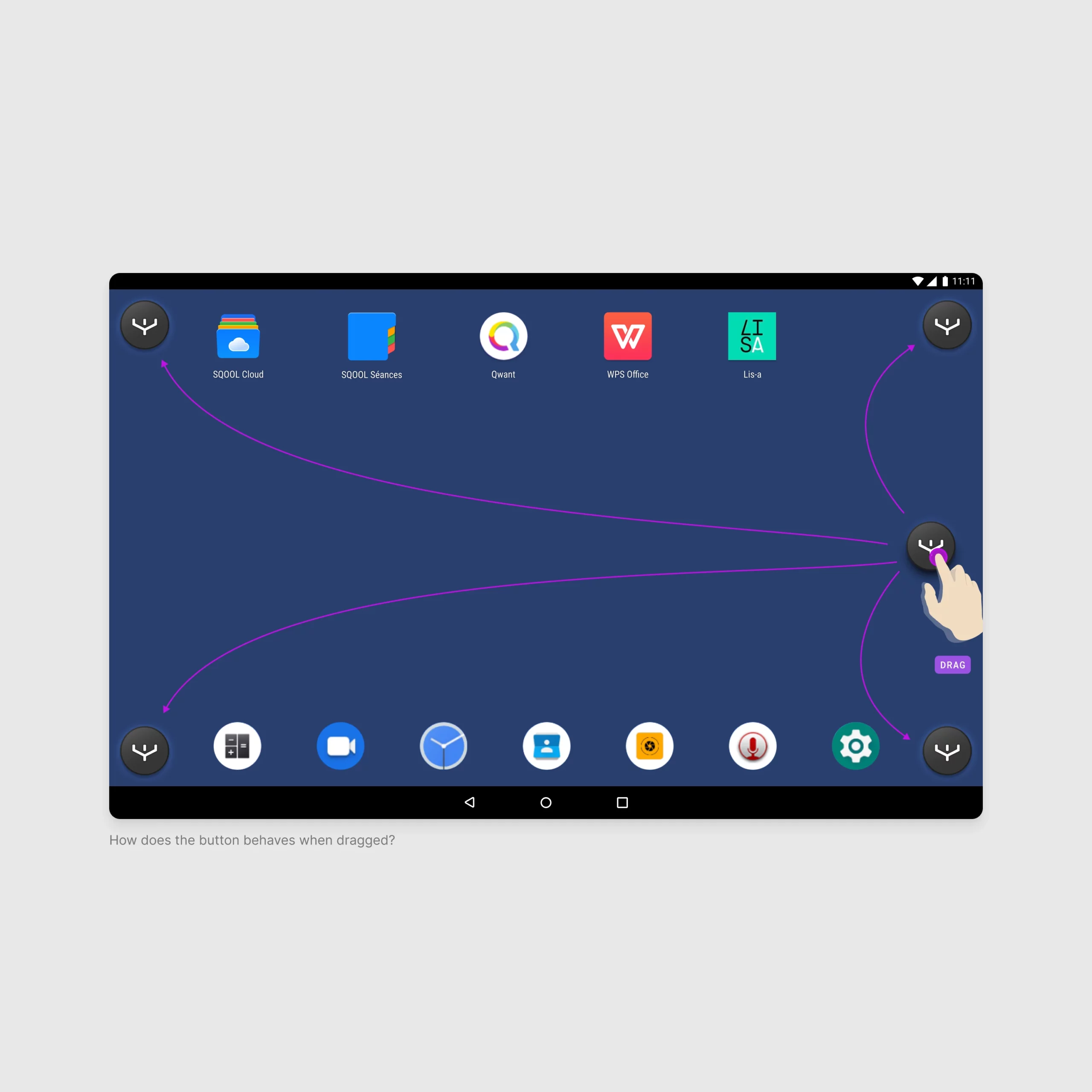
A floating interface for contextual shortcuts, with wireframes, icons and behavior specs.
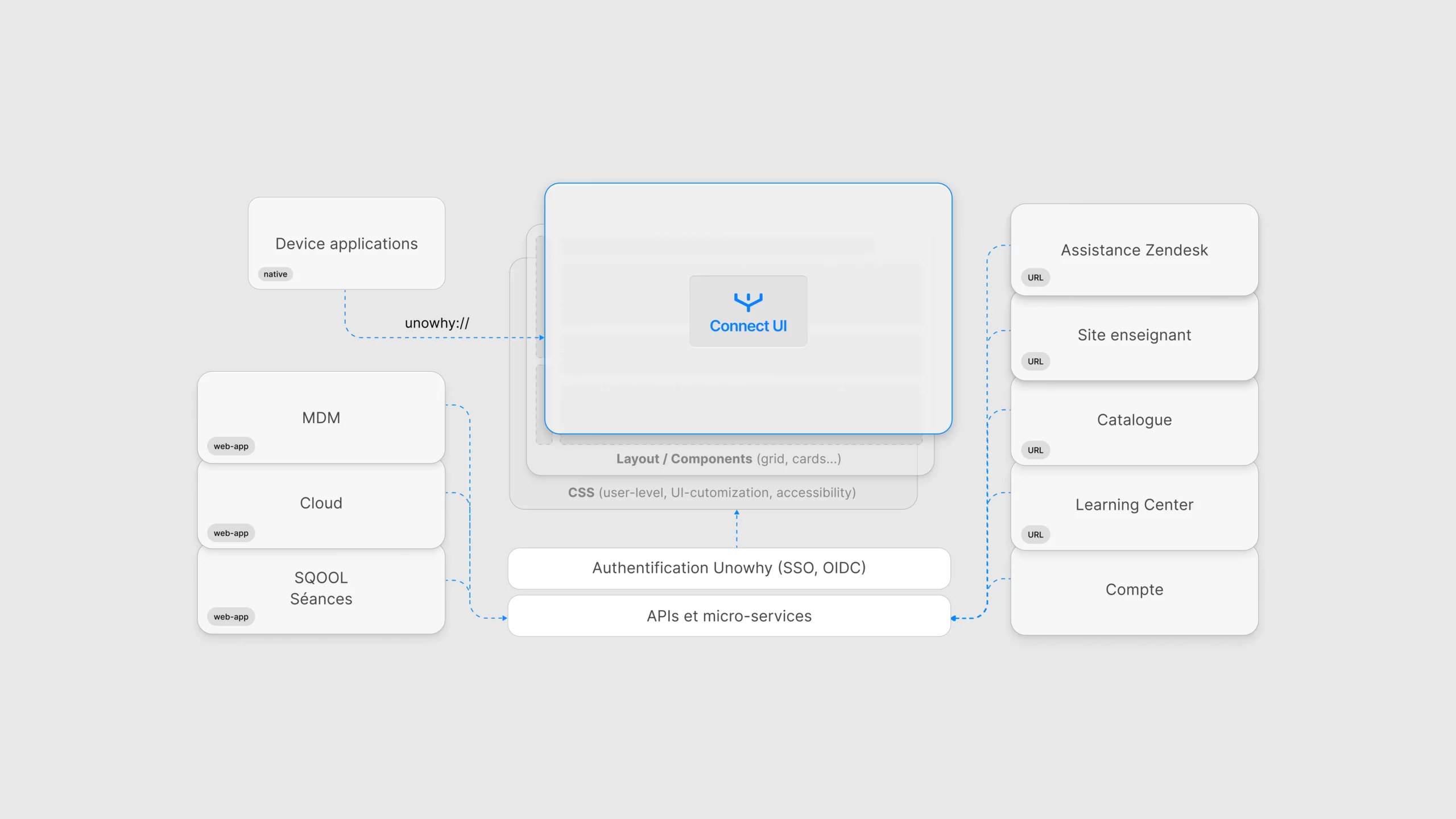
Technical architecture
How the web dashboard connects to the existing Android infrastructure.
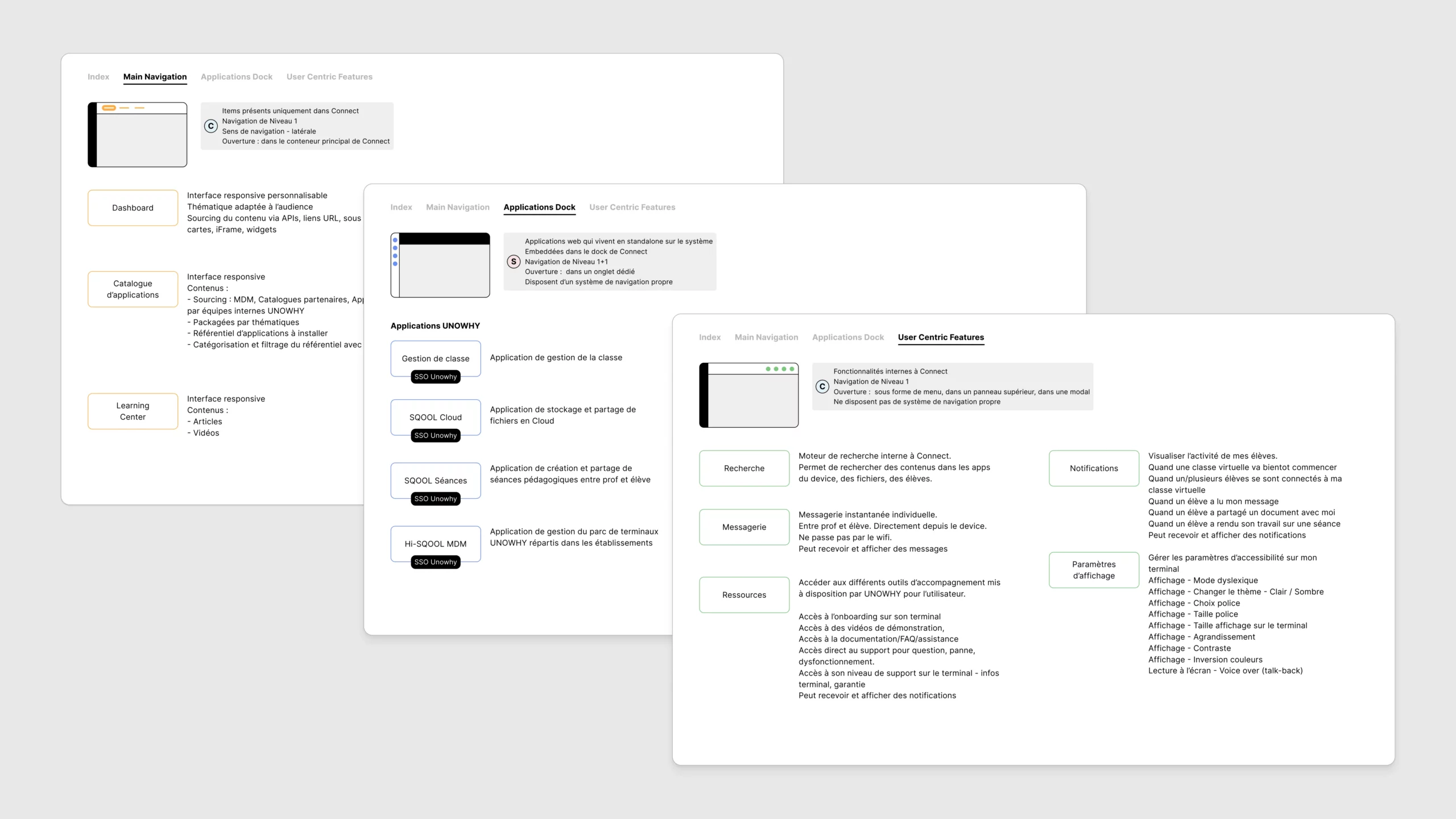
Specifications
Implementation and content specs, and the app loading choreography.
Visual language
Components and style that became the base of the SQOOL design system.
The Android launcher was the students’ way into their apps, but it no longer kept up with Android versions or with how schools worked. Replacing it meant choosing a direction for every app attached to it, without proof that a web approach would hold on the tablets already in schools. The stake was as much the decision as the interface: producing what the team needed to decide.
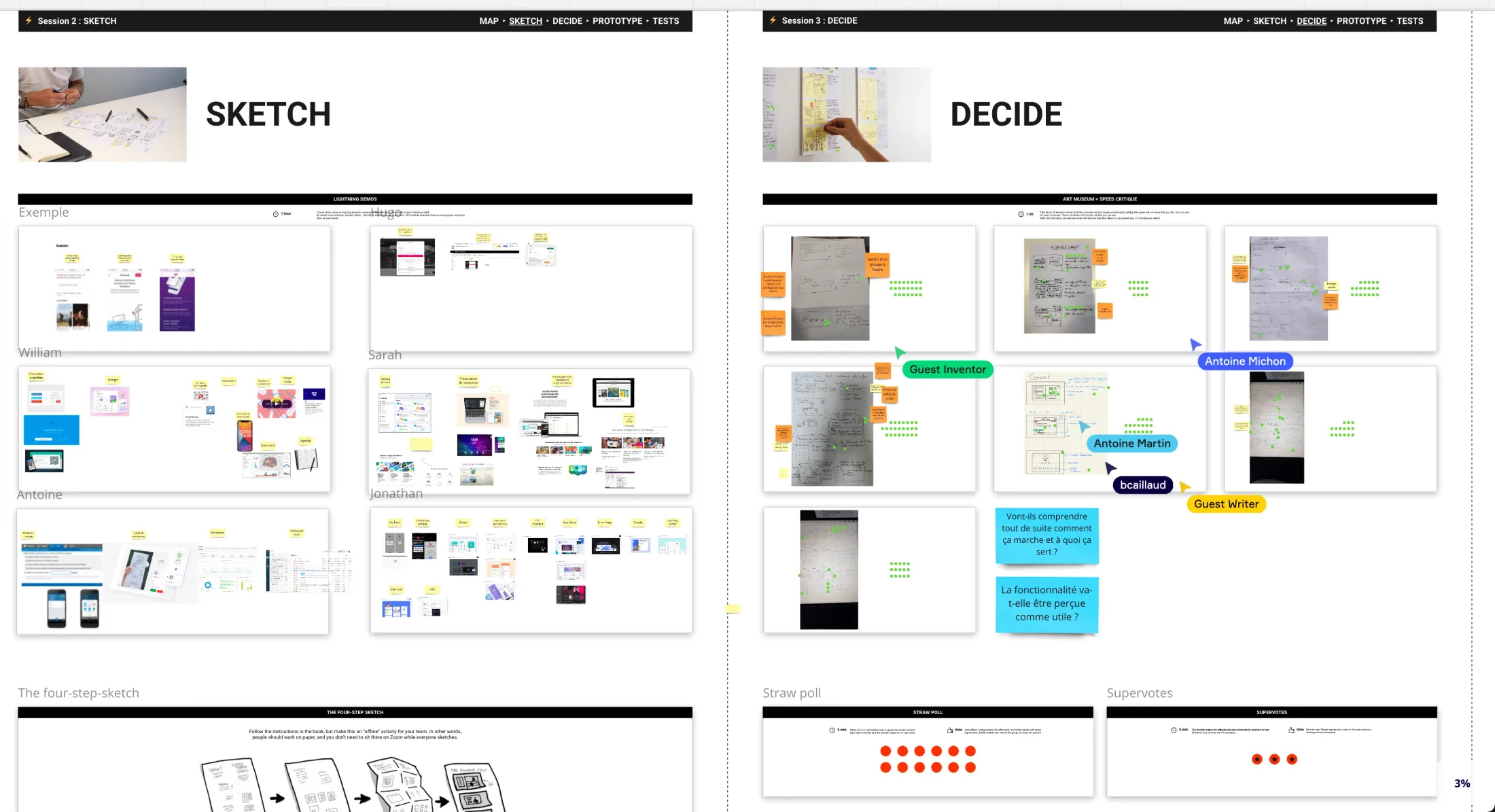
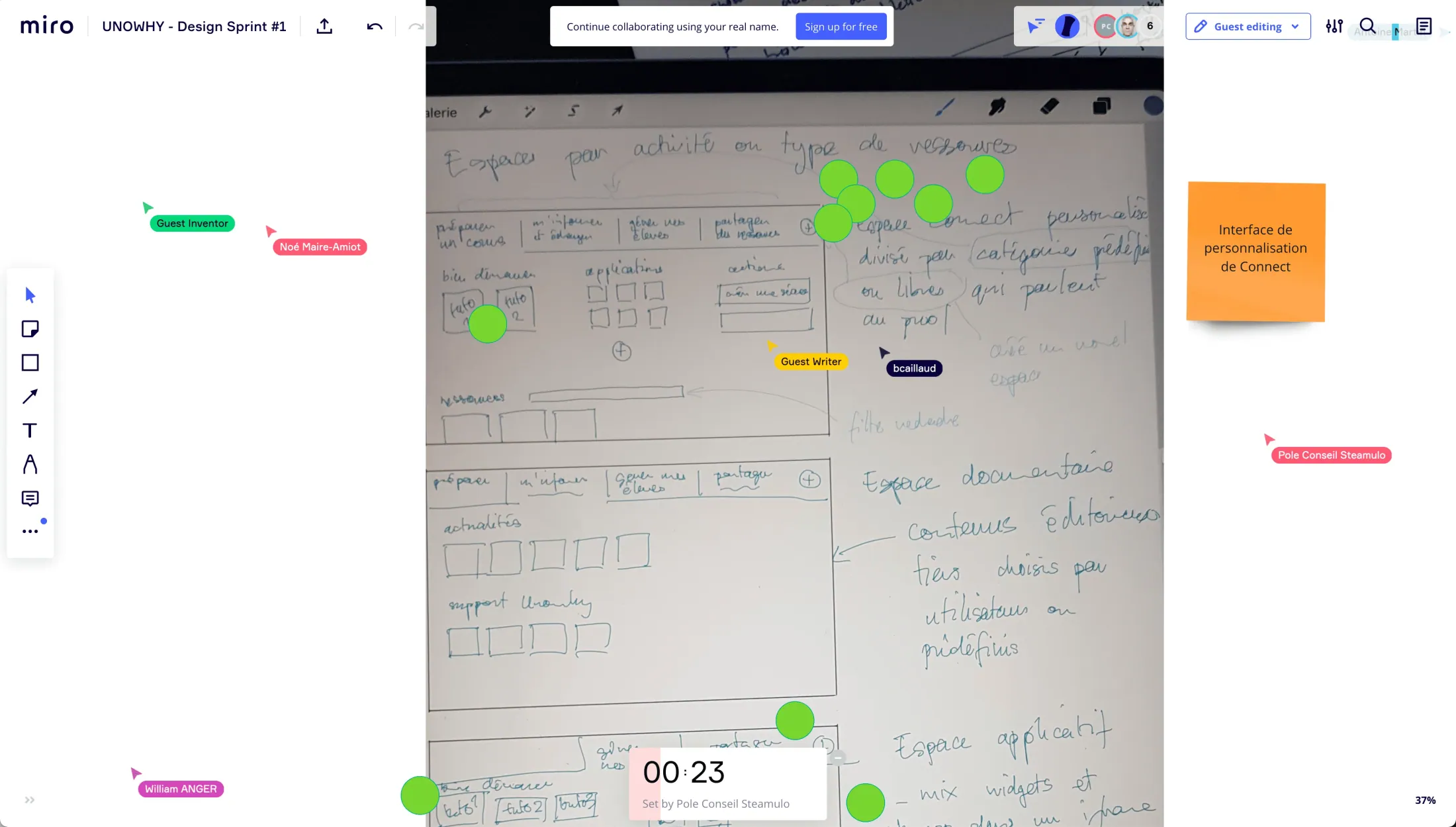
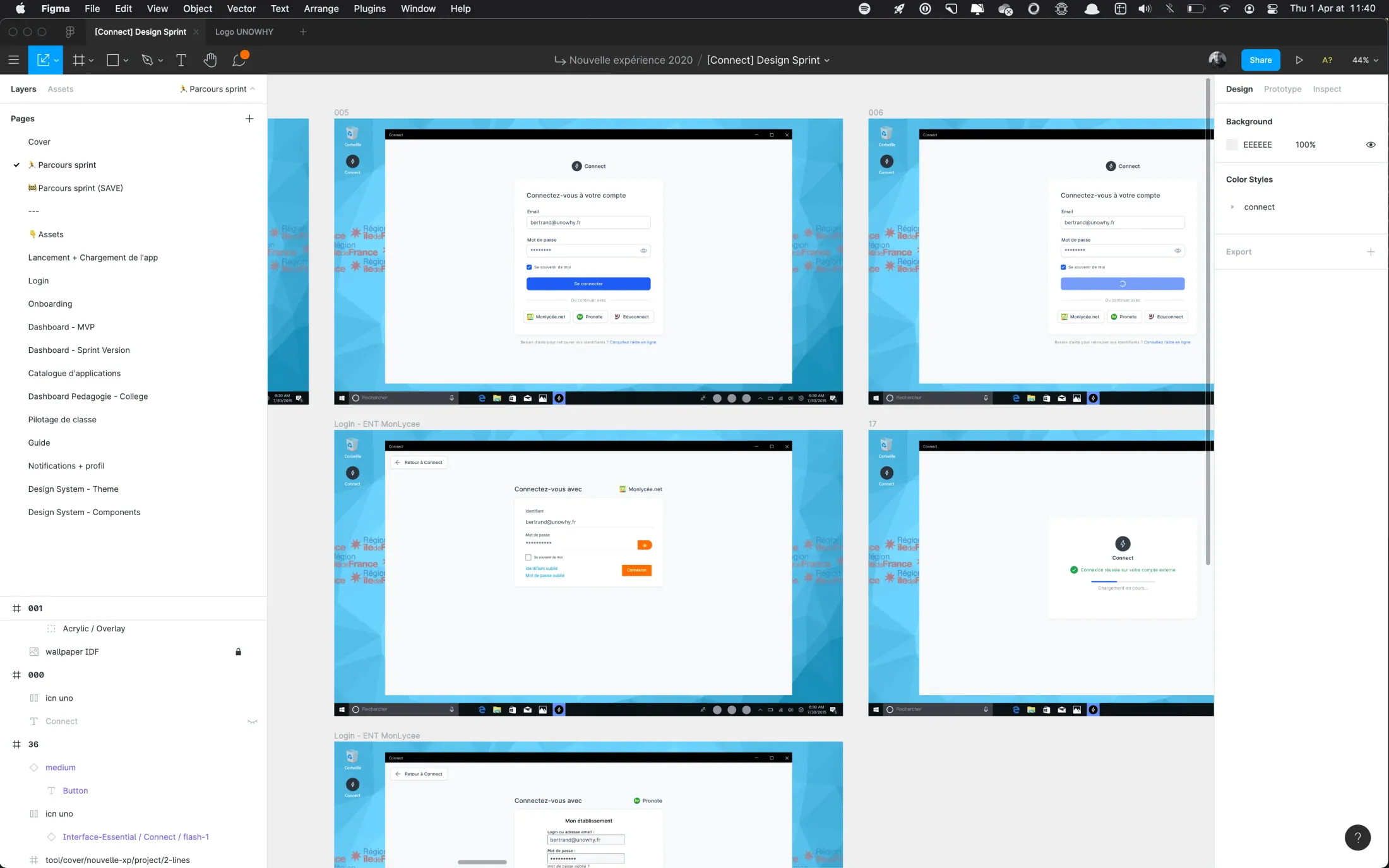
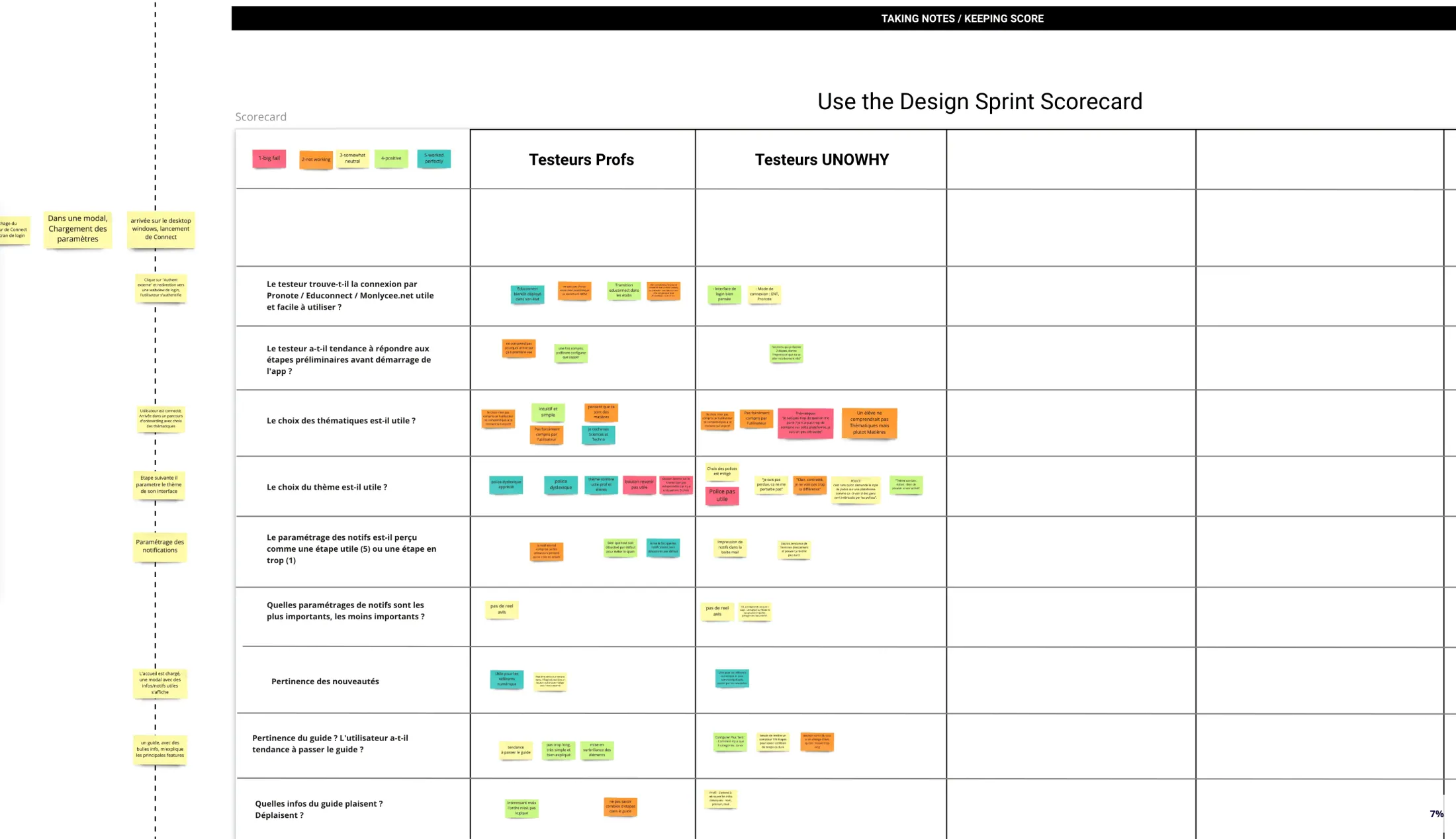
I ran a strategic design sprint, held remotely on Miro and Figma, around one question: how do we make digital tools easier for teachers to adopt in class? The prototype was tested with teachers and UNOWHY staff, and the results were gathered in a scorecard. A sprint gives user feedback on a hypothesis in a few days, where documentation alone would take months.
With a developer, I built the dashboard in React on a modular grid (React Grid Layout) that hosts apps in iframes. Mockups could not show whether rearrangeable blocks load fast on a tablet. A working prototype could, and it is the prototype that was presented to the leadership.
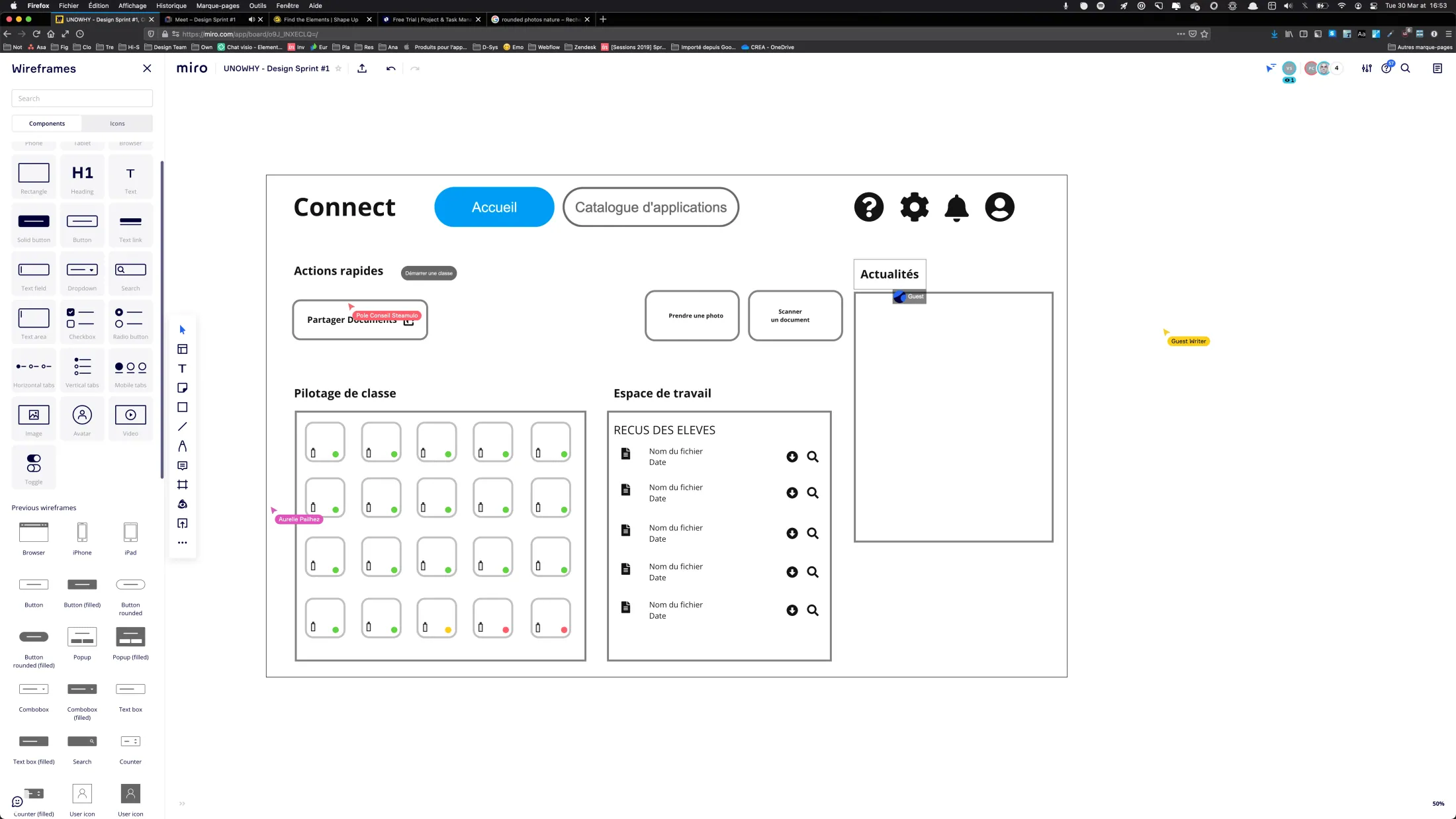
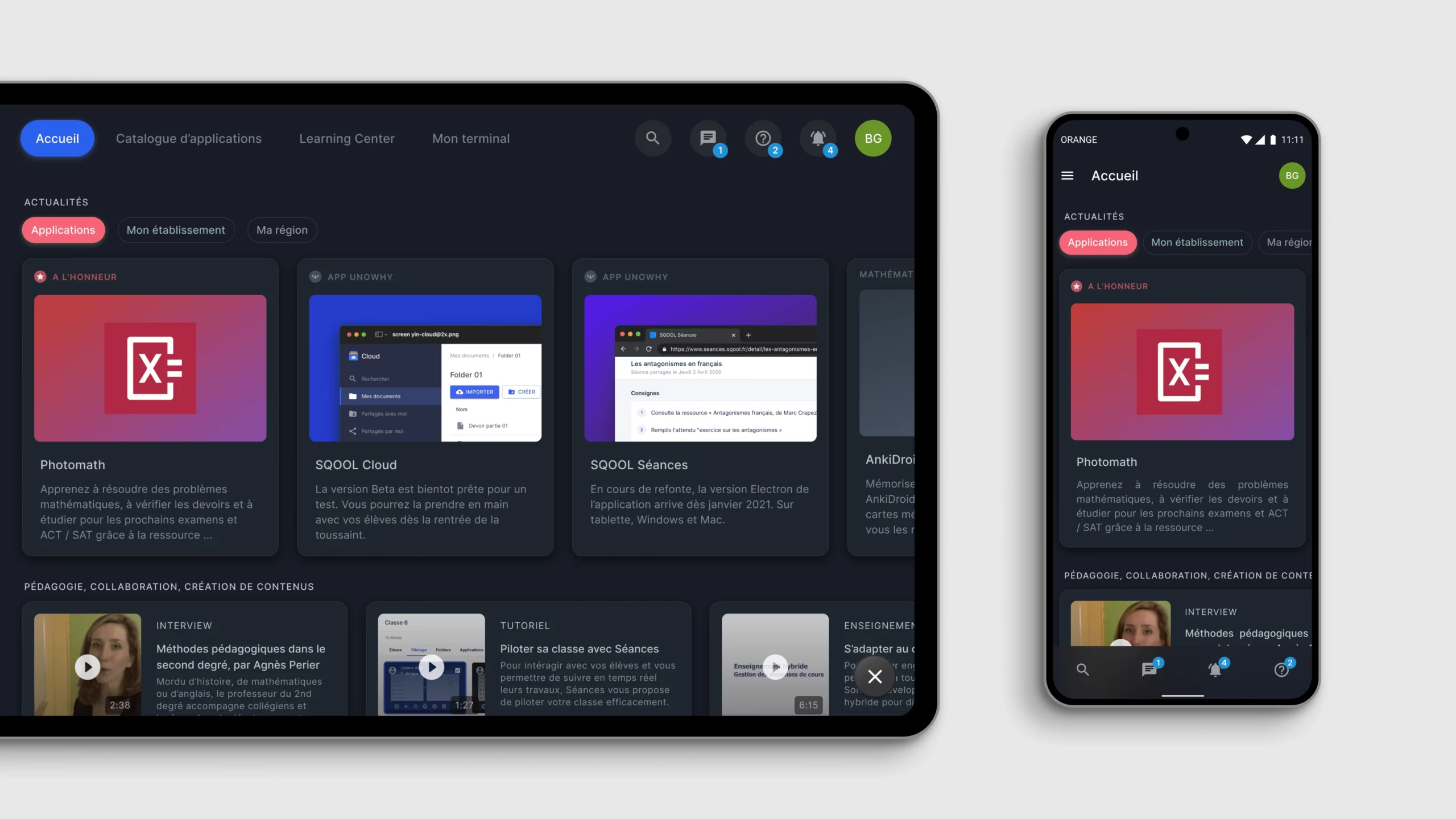
On the home screen, the main area holds what a teacher repeats most: start a session, share a document, lock the devices. Class status, the app catalog and notifications are organized around it, in light and dark themes (the dark one for projection in class). Notifications are ranked to flag what matters without distracting.
Alongside the dashboard I explored La Bulle, a floating module that stays visible above the Android interface. Inspired by gaming overlays and stylus menus (the radial shortcuts of the Galaxy Note), it opens a radial or vertical menu with contextual shortcuts: search, screen capture, sharing. The idea was permanent access to frequent actions without leaving the current app. I specified its animation states, edge cases and integration with the system.
The prototype rested on an architecture that had to coexist with the existing Android infrastructure, and the diagram shows how the web dashboard plugs into it. I wrote the implementation and content specifications for the React developer, including the app loading choreography. The visual language set here (colors, typography, spacing) became the base of the SQOOL design system.
Connect never launched as a single product, and it was only tested internally, for a year. It still served as proof: React and a modular web approach held on the existing tablets, and the prototype convinced the leadership.
It also showed the limits of the idea. A dashboard that gathers everything became dense for teachers, and it would have competed directly with the ENT (digital workspaces) that schools already used. That finding led to splitting the platform into focused apps, which the SQOOL suite case study tells.